



How Does The Angry Box Stack Up?
Side-by-side comparisons of the Angry Box against the monitors mixing engineers actually use: the NS10, Auratone, MixCube, Genelec 8010, Adam T5V and KRK Rokit. Price, specs, and an honest verdict on where each one wins.
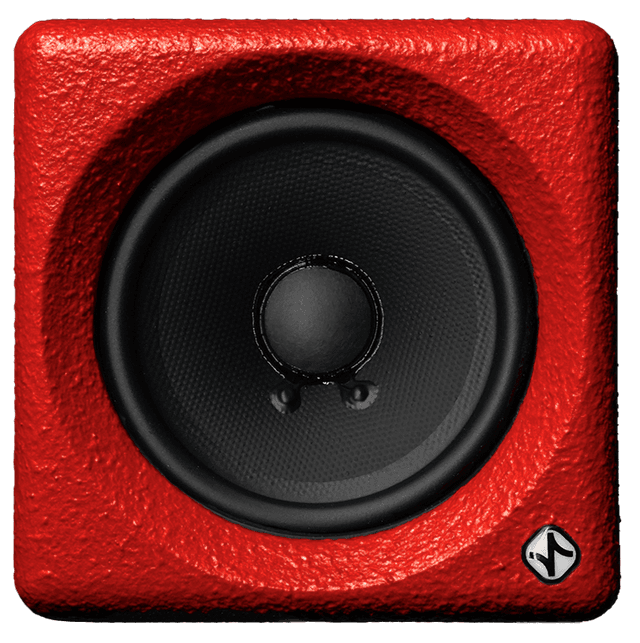
Most studio monitors are two-way designs, with a tweeter and a woofer at different positions. The Angry Box uses a single full-range driver in a sealed cube, so the sound comes from one point in space. Stereo imaging is more precise, time alignment is inherent, and every unit in an immersive rig behaves identically.
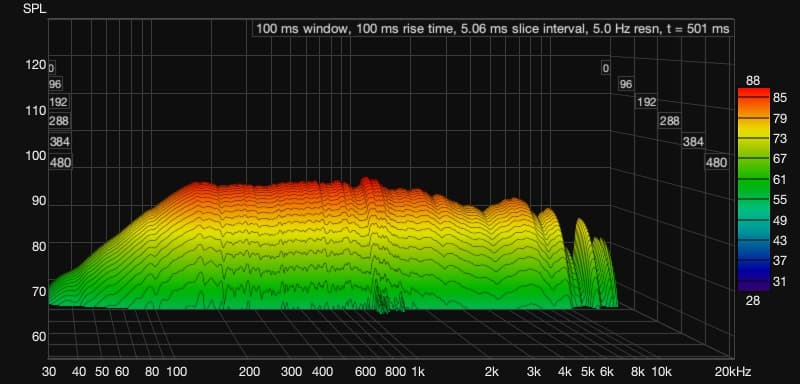
LearnWhat Is a Point-Source Studio Monitor?The Yamaha NS10 is discontinued, ageing, and costs more used than it did new. The Angry Box was designed with the same philosophy: sealed enclosure, fast transients, honest midrange, and a low end that rolls off where most playback systems do. Our real-world waterfall plots show a strikingly similar time-domain behaviour, without the passive driver, the separate amp, or the ear fatigue.
Most studio monitors are designed to sound good. The Angry Box is designed to tell the truth, particularly in the midrange, where vocals, guitars, and most mix decisions live. The mid-focus mode narrows the response to 90Hz–12kHz, isolating exactly the range the NS10 and Auratone have traded on for decades.
Angry Box vs Yamaha NS10M
The industry standard reference
| Angry Box | Yamaha NS10M | |
|---|---|---|
| Price (per pair) | £565 | ~£800–£1,200 |
| Type | Active, DSP | Passive (needs amp) |
| DSP onboard | ✓ | ✗ |
| Mid-focus mode | ✓ | ✗ |
| Point-source driver | ✓ | ✗ |
| Sealed enclosure | ✓ | ✓ |
| Dimensions | 14 × 14 × 14 cm | 21 × 33 × 21 cm |
| Amplification | 65W Class D | Passive (amp required) |
| Max SPL | 102 dB | ~100 dB |
| Bandwidth | 60Hz–20kHz (−10dB) | 60Hz–20kHz |
| Mic stand thread | ✓ | ✗ |
The NS10 is the original unforgiving reference: its harsh, hyped midrange makes a good mix obvious by making a bad one painful. It's discontinued, which means used pricing varies wildly and units are ageing. The Angry Box was specifically designed with a similar sealed-box, fast-transient philosophy (the waterfall plots are strikingly similar) but adds DSP, a self-contained amplifier, and a mid-focus mode that replicates the same forcing function without the pain tax.
LearnImpulse Response ExplainedRead the full Angry Box vs Yamaha NS10M comparison →Angry Box vs Auratone 5C Active
The mono mix-check cube
| Angry Box | Auratone 5C Active | |
|---|---|---|
| Price (per pair) | £565 | ~£600 |
| Type | Active, DSP | Active |
| DSP onboard | ✓ | ✗ |
| Mid-focus mode | ✓ | ✗ |
| Point-source driver | ✓ | ✓ |
| Sealed enclosure | ✓ | ✓ |
| Dimensions | 14 × 14 × 14 cm | 16 × 16 × 16 cm |
| Amplification | 65W Class D | 30W RMS / 50W peak |
| Max SPL | 102 dB | ~95 dB |
| Bandwidth | 60Hz–20kHz (−10dB) | 100Hz–12kHz |
| Mic stand thread | ✓ | ✗ |
The Auratone 5C Active is the small-cube reference that mixing engineers use to check how a mix translates to consumer speakers, radios, and laptops. It's a self-powered single-driver cube rated at 30W RMS (50W peak) that tops out around 95 dB. The Angry Box covers the same use case (compact, midrange-honest, point-source) but goes louder, extends lower, and adds a DSP mid-focus mode for when you specifically want to work in that 300Hz–12kHz critical zone.
Read the full Angry Box vs Auratone 5C Active comparison →Angry Box vs Avantone MixCube
The Auratone alternative
| Angry Box | Avantone MixCube | |
|---|---|---|
| Price (per pair) | £565 | ~£400–£500 |
| Type | Active, DSP | Active |
| DSP onboard | ✓ | ✗ |
| Mid-focus mode | ✓ | ✗ |
| Point-source driver | ✓ | ✓ |
| Sealed enclosure | ✓ | ✓ |
| Dimensions | 14 × 14 × 14 cm | 15 × 15 × 15 cm |
| Amplification | 65W Class D | ~20W |
| Max SPL | 102 dB | ~96 dB |
| Bandwidth | 60Hz–20kHz (−10dB) | 90Hz–17kHz |
| Mic stand thread | ✓ | ✗ |
The MixCube is the go-to affordable alternative to the Auratone: active, compact, midrange-focused. At ~20W and 96 dB max SPL it runs out of headroom in louder sessions. The Angry Box is slightly smaller (14 cm cube vs 15 cm), 65W Class D, hits 102 dB and extends an octave lower. Where the MixCube has a single fixed midrange voicing, the Angry Box adds onboard DSP with a switchable mid-focus mode and a full-range mode, so it works as both a mix-check cube and a full-range reference. It costs more, but you get both monitors in one box.
Read the full Angry Box vs Avantone MixCube comparison →Angry Box vs Genelec 8010A
Finnish precision, compact form
| Angry Box | Genelec 8010A | |
|---|---|---|
| Price (per pair) | £565 | ~£700 |
| Type | Active, DSP | Active, SAM EQ |
| DSP onboard | ✓ | ✓ |
| Mid-focus mode | ✓ | ✗ |
| Point-source driver | ✓ | ✗ |
| Sealed enclosure | ✓ | ✗ |
| Dimensions | 14 × 14 × 14 cm | 18 × 12 × 11 cm |
| Amplification | 65W Class D | 25W + 25W biamp |
| Max SPL | 102 dB | 96 dB |
| Bandwidth | 60Hz–20kHz (−10dB) | 74Hz–20kHz (−6dB) |
| Mic stand thread | ✓ | ✗ |
Genelec's 8010A is a benchmark compact monitor: beautifully built, with SAM room correction via their GLM software (sold separately). It's a ported two-way design, which means phase behaviour between the woofer and port is less controlled than a sealed enclosure. At 96 dB SPL it's also quieter than the Angry Box's 102 dB. The Angry Box is cheaper, louder, sealed, and includes onboard DSP with mid-focus switching. Genelec's brand reputation and SAM ecosystem are genuine advantages if you're already in that world; if you're not, the Angry Box gets you further for less.
LearnSealed vs Ported Studio MonitorsRead the full Angry Box vs Genelec 8010A comparison →Angry Box vs Adam Audio T5V
Ribbon tweeter, budget price
| Angry Box | Adam Audio T5V | |
|---|---|---|
| Price (per pair) | £565 | ~£320 |
| Type | Active, DSP | Active |
| DSP onboard | ✓ | ✗ |
| Mid-focus mode | ✓ | ✗ |
| Point-source driver | ✓ | ✗ |
| Sealed enclosure | ✓ | ✗ |
| Dimensions | 14 × 14 × 14 cm | 27 × 18 × 22 cm |
| Amplification | 65W Class D | 50W |
| Max SPL | 102 dB | 110 dB |
| Bandwidth | 60Hz–20kHz (−10dB) | 45Hz–25kHz |
| Mic stand thread | ✓ | ✗ |
The T5V is the value pick: a ribbon tweeter and a larger woofer in a ported cabinet at a budget price. It goes louder and lower than the Angry Box on paper. Where it loses is resolution and imaging: it's a two-way ported design with the inherent time smear that brings, and no DSP or mid-focus modes. For broadband mixing at volume it's competent. For critical midrange work, translation checking, or immersive setups where you need 7–13 matched identical units, the Angry Box's point-source consistency and compact form factor win decisively.
LearnPoint-Source vs Traditional Studio MonitorsRead the full Angry Box vs Adam Audio T5V comparison →Angry Box vs KRK Rokit 5 G4
The home studio staple
| Angry Box | KRK Rokit 5 G4 | |
|---|---|---|
| Price (per pair) | £565 | ~£340 |
| Type | Active, DSP | Active, DSP EQ |
| DSP onboard | ✓ | ✓ |
| Mid-focus mode | ✓ | ✗ |
| Point-source driver | ✓ | ✗ |
| Sealed enclosure | ✓ | ✗ |
| Dimensions | 14 × 14 × 14 cm | 27 × 17 × 22 cm |
| Amplification | 65W Class D | 55W |
| Max SPL | 102 dB | 104 dB |
| Bandwidth | 60Hz–20kHz (−10dB) | 43Hz–40kHz |
| Mic stand thread | ✓ | ✗ |
The Rokit G4 has onboard DSP EQ and strong specs for the price, and it's deservedly popular for producing and beat-making. The common professional criticism is its voicing: a hyped, scooped 'smiley' response with an emphasised, ported low end. That's enjoyable to work on, but it tends to flatter mixes, and decisions made on it (especially in the low end) often don't translate to other systems. The ported two-way design also trades away some transient and phase accuracy. The Angry Box takes the opposite approach: sealed, point-source and transient-accurate, with a mid-focus mode built to expose problems rather than mask them. It costs more, but it's a reference tool rather than a listening speaker.
LearnWhy Some Monitors Translate Better Than OthersRead the full Angry Box vs KRK Rokit 5 G4 comparison →Hear It For Yourself.
Every comparison above is based on published specs and independent measurements. The only way to know if a speaker works for you is to hear it. Find a dealer near you or request a demo directly.
Competitor prices and specifications are based on publicly available information as of June 2026 and may change. All prices shown are approximate GBP per pair, excluding VAT.
Sign up to hear more when we release something new


