





Acoustic Treatment vs Room Correction
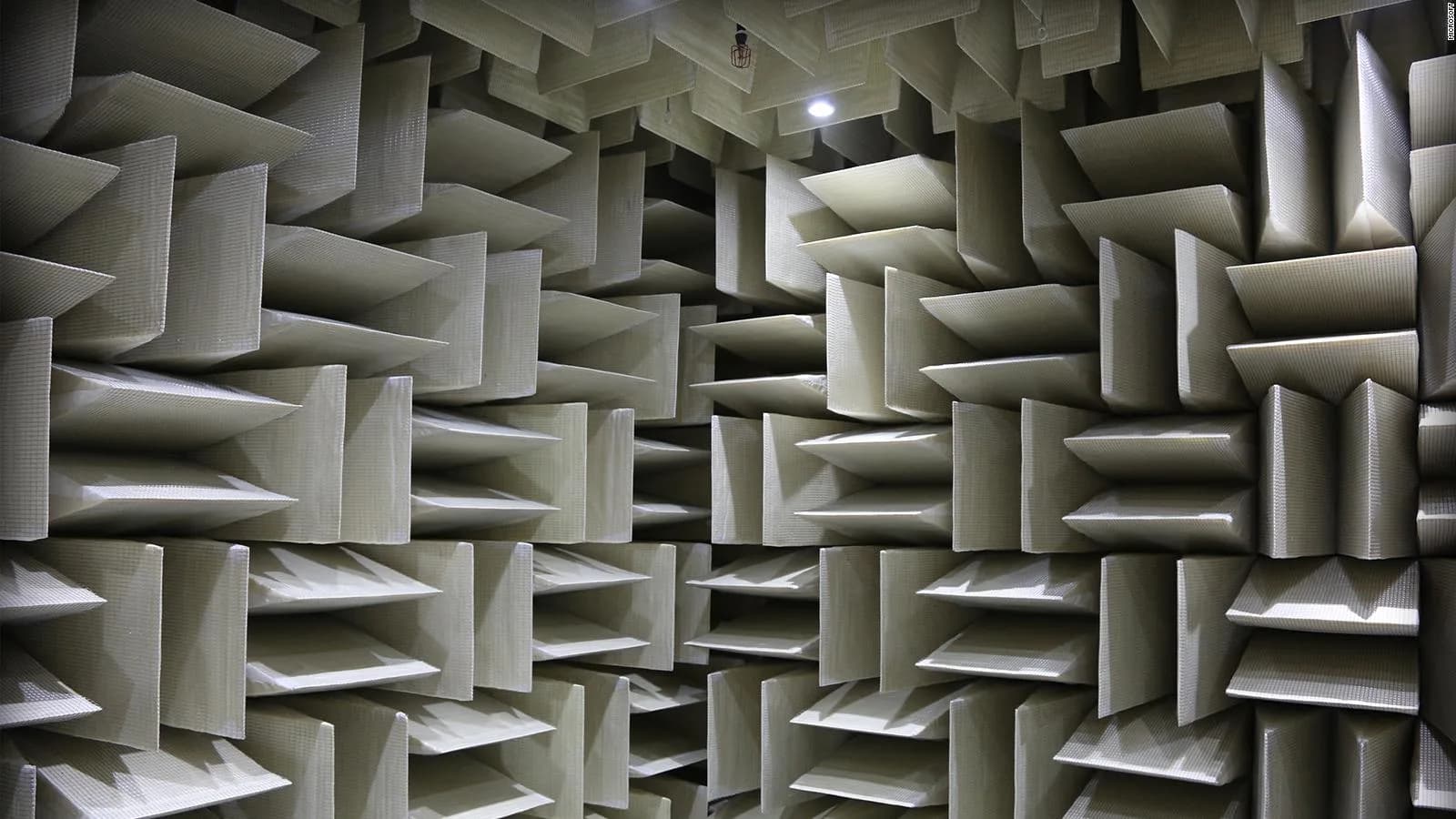
Acoustic treatment uses physical materials such as absorption, bass traps and diffusion to change how sound behaves in a room. Room correction uses measurement and digital filters to adjust the signal sent to your monitors to compensate for the room's measured response. They overlap but aren't interchangeable. Treatment fixes problems at the source (decay time, reflections, modal energy) while correction adjusts tonal balance after the fact and can't undo timing or fill in deep nulls. For most people the practical question isn't which is better but which to prioritise right now, and that depends on your room, budget and whether you can physically modify the space.
What Each One Does
The two approaches attack the room from opposite ends. Understanding the mechanism is what makes the decision obvious later.
- Acoustic treatment
- Physical materials placed in the room to control sound: porous absorption for mids and highs, deep bass traps for low frequencies, and diffusion to scatter reflections. It changes the room's actual acoustic behaviour.
- Room correction
- A measurement-driven process that applies digital filters (EQ, and sometimes phase or time adjustment) to the signal feeding the monitors, compensating for the room's measured frequency response at the listening position.
Treatment works on the sound field everywhere in the room and across time. It removes energy, so reflections are quieter and resonances decay faster. Correction works on the electrical signal before it's played, so it can only add or subtract level at given frequencies for a measured position. It cannot make a reflection arrive earlier or make a resonance ring for less time.
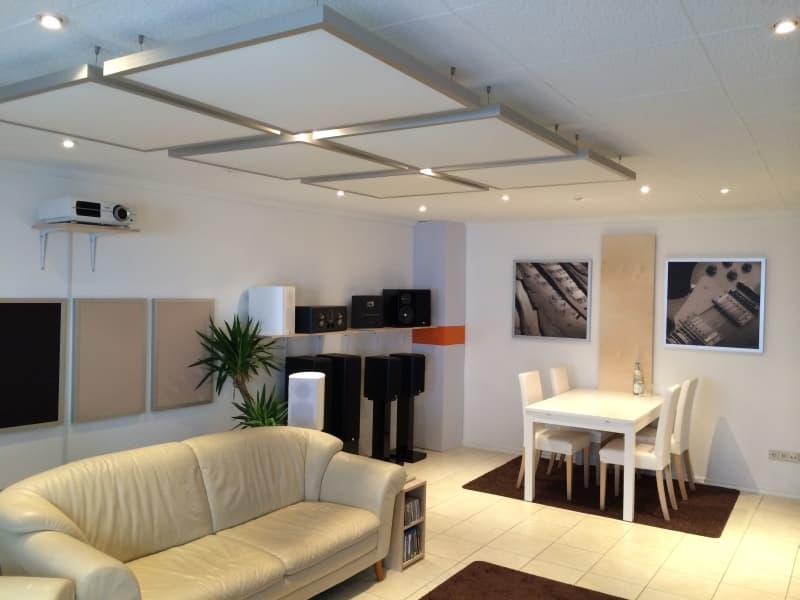
What Each Can and Can't Fix
This is the heart of the matter. The two tools have genuinely different capabilities, and the overlap is smaller than it first appears.
| Problem | Acoustic treatment | Room correction |
|---|---|---|
| Tonal balance and broad peaks | Helps (especially bass traps) | Strong, its main job |
| Modal peaks (bass booms) | Reduces | Reduces level (but not decay) |
| Modal nulls (bass dips) | Reduces depth somewhat | Can't refill, boosting wastes headroom |
| Decay time and ringing | Shortens it | Cannot change it |
| Early reflections | Absorbs or diffuses them | Cannot remove them |
| Response at other seats | Improves the whole room | Optimised for one position |
Correction can't fix a null
At a modal null the energy is genuinely cancelled at that position. Boosting that frequency with EQ just burns amplifier headroom and can overdrive the woofer without meaningfully raising the level. Nulls are a placement-and-treatment problem, not an EQ problem.
The asymmetry that matters is that treatment addresses causes (energy and time) while correction addresses one symptom (tonal balance at a point). That's why correction layered on an untreated room can make the measured graph look flat while the room still sounds boxy and rings in the bass. The decay and reflections it can't touch are still there.
A Decision Framework
For most people the realistic question is where to put the next bit of time and money. Work through these factors.
Whether you can modify the room
If you own the space or can mount panels and place bass traps, treatment should lead. It fixes problems correction can't, and improves the room for every seat and every monitor. If you rent, can't drill walls, or share the space, you're weighted toward placement and correction, supplemented by free-standing or portable absorption you can take with you.
Budget, and where it goes furthest
Effective bass control is bulky and not always cheap, but a few corner bass traps and first-reflection panels deliver a lot per pound. Many modern monitors include onboard DSP correction, or it's available in software, so correction can be low- or no-cost if you can measure. On a tiny budget, optimise placement (free), add what corner trapping you can, then correct.
How bad the room is, and where
If the problems are mostly a tonal tilt or a couple of broad peaks, correction alone gets you a long way. If the room rings, sounds boxy, or has a strong null at the mix position, correction won't solve it, and that's treatment and placement territory. Measuring the room first (a calibrated mic and free software) tells you which situation you're in before you spend anything.
Place the speakers and seat first
Before either treatment or correction, get speaker and listener placement right, including symmetry, distance from boundaries, and choosing a seat that avoids a major modal null. Placement costs nothing and changes the problem you're trying to solve.
Using Both Together, and in What Order
Treatment and correction are not rivals, and the best monitoring setups use both. The order matters. Treat and place first so the room's behaviour is as good as physics allows, then measure and apply correction to fine-tune the residual tonal balance. Correcting first and treating later means re-measuring and re-correcting anyway, because treatment changes the response correction was built for.
- 1Place speakers and seat sensibly (symmetry, boundary distance, avoid a null).
- 2Add treatment, with corner bass traps first, then first-reflection absorption, then broadband as space allows.
- 3Measure the treated room at the listening position with a calibrated mic.
- 4Apply room correction to flatten the remaining peaks and tonal tilt, sparingly, and never to boost deep nulls.
- 5Re-measure to confirm, and trust your ears and reference tracks as the final check.
Rules of Thumb
Frequently Asked Questions
What's the difference between acoustic treatment and room correction?
Treatment uses physical materials (absorption, bass traps, diffusion) to change how the room behaves acoustically. Room correction uses measurement and digital filters to adjust the signal sent to the monitors, compensating for the room's measured response at the listening position.
Can room correction replace acoustic treatment?
No. Correction can flatten tonal peaks and tilt at one position, but it cannot shorten reverberation or decay, remove early reflections, or refill deep modal nulls. Those need physical treatment and good placement. Correction complements treatment rather than replacing it.
Which should I do first, treatment or correction?
Placement first (it's free), then treatment, then correction. Treat and position the room so its acoustics are as good as possible, then measure and apply correction to fine-tune what remains. Correcting before treating means redoing the correction once treatment changes the response.
I rent and can't mount anything, so what should I do?
Lean on what's reversible. Optimise speaker and listener placement, use free-standing bass traps and portable absorption panels, and apply DSP correction to tidy the residual tonal balance. It's a pragmatic path when you can't physically modify the space.
Why can't EQ fix a bass null?
At a null, the room cancels that frequency acoustically at your position, so the energy is genuinely missing. Boosting it with EQ wastes amplifier headroom and can overdrive the woofer without meaningfully raising the level. Move the speakers or seat, and treat the room, instead.
Does treatment help tonal balance, or only decay and reflections?
Both. Bass traps reduce modal peaks (a tonal effect) as well as shortening decay, and broadband absorption reduces reflections that colour the response. Treatment improves tonal balance at the source, and correction then fine-tunes what's left.
Is room correction worth it if my room is untreated?
It can still improve tonal balance and is better than nothing, but expect limited results. The decay, reflections and nulls it can't address will still be audible. The biggest gains come from at least some treatment plus placement first.
Do I need a measurement mic to do room correction properly?
Yes, ideally a calibrated measurement microphone with free or built-in software. Correction should be based on a measurement at the listening position, not guesswork. Measuring also tells you whether your problems are tonal (correctable) or time-based (not).
Will treating or correcting one seat help the rest of the room?
Treatment improves the whole room, so other seats benefit. Correction is optimised for the measured position and may be less accurate elsewhere. If multiple positions matter, treatment carries more of the load.
What's the most cost-effective starting point?
Placement (free), then corner bass traps and first-reflection panels, then correction using onboard or software DSP. Measure first so you spend on the problem you actually have rather than guessing.
Conclusion
Acoustic treatment and room correction aren't competing answers to the same question. They are different tools with overlapping but distinct jobs. Treatment changes the room physically and fixes causes (decay, reflections, modal energy), while correction adjusts the signal and fine-tunes one symptom (tonal balance at a point). Correction can't shorten decay, remove reflections, or refill nulls, so it can't stand in for treatment. The practical decision depends on your room, budget and freedom to modify the space. Treat first where you can, lean more on placement and correction where you can't, and measure before you spend. Used together, in the right order, they get a real-world room far closer to accurate than either can alone.
Glossary
- Acoustic treatment
- Physical materials (absorption, bass traps, diffusion) that change how sound behaves in the room.
- Room correction
- Measurement-based digital filtering applied to the monitor signal to compensate for the room's response.
- Bass trap
- Deep, dense low-frequency absorber, usually placed in corners where modal pressure is highest.
- Decay time
- How long sound takes to die away in the room. Shortened by absorption, unaffected by EQ.
- Modal null
- A position or frequency where a room mode cancels the bass. Can't be restored by boosting EQ.
Sign up to hear more when we release something new


