





Desk Reflections Explained
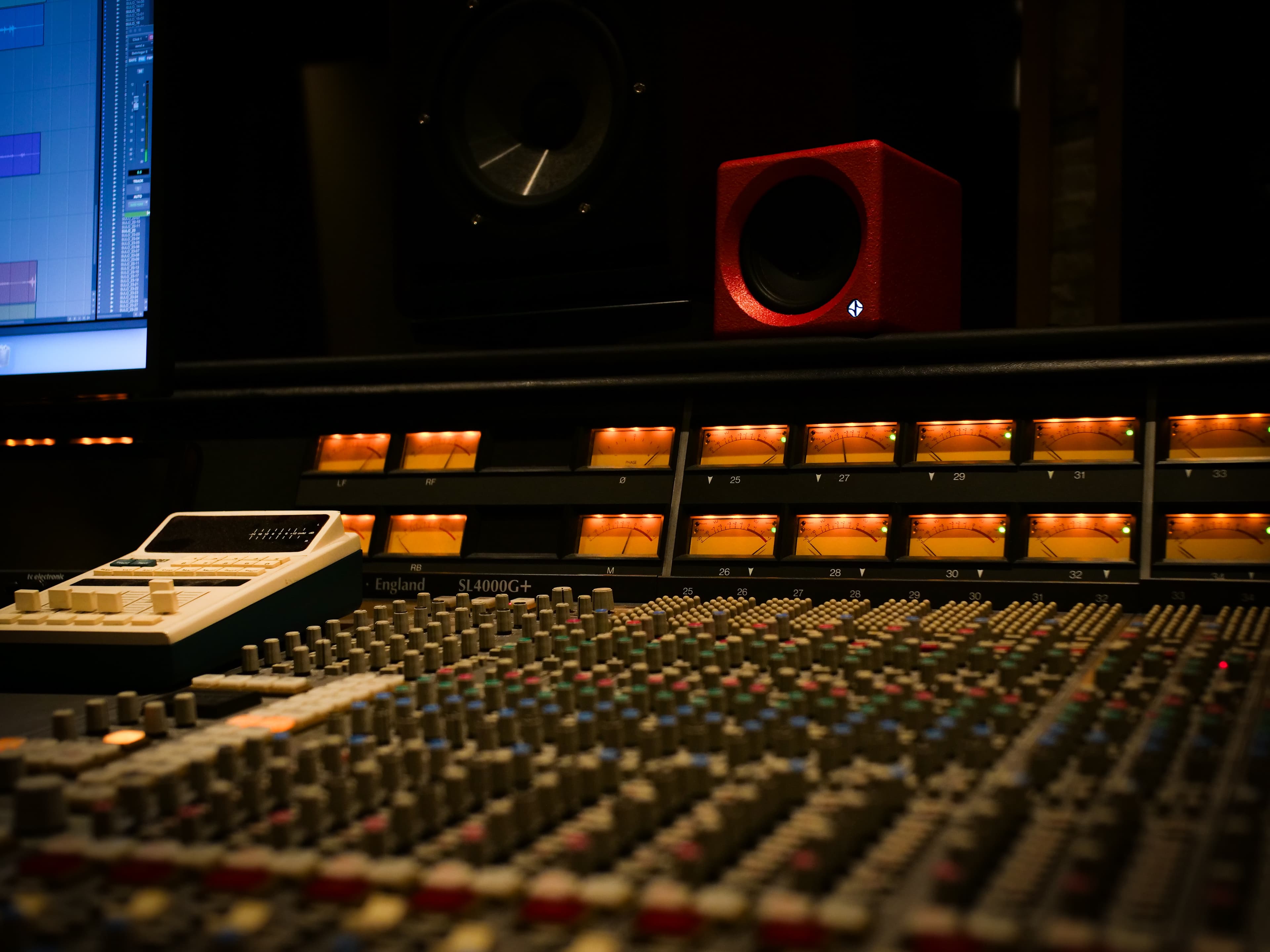
A desk reflection is the sound from your monitors that bounces off the desk surface and reaches your ears shortly after the direct sound. Because the reflected path is slightly longer, the two combine out of step and cancel at some frequencies and reinforce at others, an effect called comb filtering. The audible result is a dip in the response, usually in the lower midrange, plus a smearing of the stereo image. The cause is geometry, so the fixes are geometric: raise and decouple the monitors, tilt them, move them clear of the desk, and reduce the reflective area between you and the speakers.
What a Desk Reflection Is
Sound leaves a monitor in all directions, not just straight at your ears. Some of it travels down to the desk, reflects off the hard surface, and arrives at your ears a moment after the direct sound. That reflected copy has travelled a longer path, so it is delayed relative to the direct sound, and the two combine at your ears.
- Desk reflection
- The monitor sound that reaches the listener after bouncing off the desk surface, arriving slightly later than the direct sound because its path is longer.
The desk is usually the first and strongest reflecting surface in a seated setup, because it is large, hard and directly between the monitors and the listener. That makes its reflection one of the most audible in a small studio, often more so than the side walls.
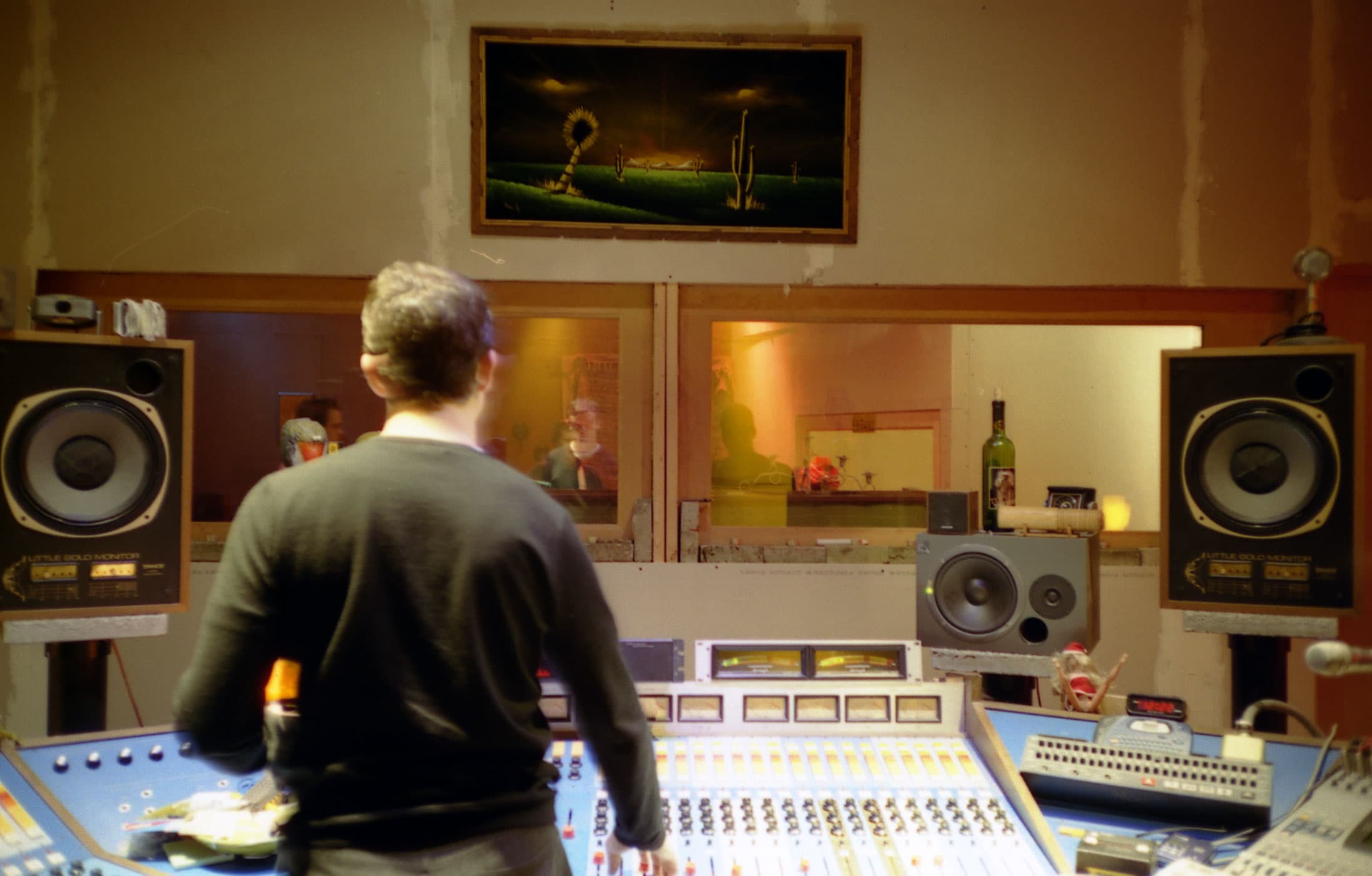
How It Colours the Sound
When the delayed reflection meets the direct sound, they reinforce at frequencies where they line up and cancel at frequencies where they are opposed. This produces a series of peaks and dips across the spectrum, known as comb filtering. The most audible feature is usually a cancellation dip in the lower midrange, with the exact frequency set by the difference in path length between the direct and reflected sound.
- Comb filtering
- A pattern of regularly spaced peaks and dips caused when a sound combines with a delayed copy of itself, such as a desk reflection meeting the direct sound.
There are two practical consequences. The response is coloured, so a flat monitor no longer measures flat at your ears, which affects tonal decisions. The image is also blurred, because the reflection adds a delayed, level-shifted copy of each sound that confuses the localisation cues. Both effects shift as you move, since the path length changes with your position.
Reducing Desk Reflections
Because the cause is the geometry of the reflection, the fixes change that geometry so the reflection is weaker, later, or aimed away from your ears.
- Raise the monitors on decoupled stands so the tweeters are at ear height and the path to the desk is less direct.
- Tilt the monitors so their main output points at your ears rather than down toward the desk.
- Move the monitors forward, toward the front edge of the desk, so less of the surface sits in the reflection path.
- Reduce the reflective area between you and the monitors by clearing clutter, and consider a soft mat or absorber on the desk where the reflection bounces.
- Use a smaller or shallower desk where possible, since a large flat surface is the worst case.
Desk reflections are one of several first reflections
The desk is usually the strongest early reflection, but the side walls and ceiling reflect too. Treating the desk reflection alongside the other first reflection points gives the clearest, most even result.
Do's and Don'ts
- ✓Raise the monitors on decoupled stands with tweeters at ear height.
- ✓Tilt the monitors so the output aims at your ears, not the desk.
- ✓Move the monitors toward the front edge of the desk to shrink the reflection path.
- ✓Clear the desk surface and treat the other first reflection points too.
- ✕Don't sit a large flat desk directly under the monitors' output and ignore it.
- ✕Don't pile gear and screens between you and the monitors, adding more reflective surfaces.
- ✕Don't rely on EQ to fix a desk-reflection dip, since it changes as you move.
- ✕Don't treat the desk reflection and forget the side walls and ceiling.
Frequently Asked Questions
What is a desk reflection?
It is the sound from your monitors that bounces off the desk surface and reaches your ears just after the direct sound. Because the reflected path is longer, it arrives delayed and combines with the direct sound, colouring the response and blurring the image.
Why does a desk reflection cause a dip in the sound?
The delayed reflection cancels the direct sound at frequencies where the two are opposed, producing comb filtering. The most audible feature is usually a cancellation dip in the lower midrange, with the exact frequency set by the path-length difference.
How do I know if I have a desk-reflection problem?
Measure the response at the listening position, where a desk reflection shows as a dip and comb pattern, or listen for a hollow lower midrange and a slightly vague image. Covering the desk reflection point and noticing a change is a quick informal test.
Can I fix desk reflections with EQ?
Not reliably. The dip changes frequency as you move, and boosting a cancellation does little because the energy is cancelled acoustically at that point. The effective fixes are geometric: monitor height, tilt, distance and reducing the reflective area.
Should I put my monitors on stands instead of the desk?
Decoupled stands at ear height usually help, because they raise the monitors above the desk and reduce both the reflection and vibration transfer into the surface. If the monitors must sit on the desk, tilt them and use isolation and absorption.
Does tilting the monitors help?
Yes. Tilting so the main output aims at your ears rather than down at the desk reduces the energy that reaches the reflecting surface, which weakens the reflection. Keep the tweeters aligned with your ears as you do it.
Does the desk reflection affect imaging or just tone?
Both. It colours the tonal balance through comb filtering and blurs the stereo image, because it adds a delayed, level-shifted copy of each sound that confuses the localisation cues. Reducing it tightens both.
Is the desk the worst reflecting surface in a studio?
In a typical seated setup it is usually the strongest early reflection, because it is large, hard and directly between the monitors and the listener. The side walls and ceiling also reflect and are worth treating alongside it.
Will room treatment fix desk reflections?
Wall and ceiling treatment helps the other first reflections, but the desk reflection is best addressed by geometry, including monitor height, tilt and position, plus reducing or covering the reflective surface. The two approaches complement each other.
Conclusion
A desk reflection is a delayed copy of the monitor sound that combs the response and blurs the image, and it is often the strongest early reflection in a seated studio. Because it is caused by geometry, the cure is geometric: raise and decouple the monitors to ear height, tilt them toward your ears, move them clear of the desk, and reduce the reflective surface between you and the speakers. These steps cost little and are often clearly audible. Treat the desk reflection together with the side-wall and ceiling reflections for the most even, best-imaging result.
Glossary
- Desk reflection
- Monitor sound reaching the listener after bouncing off the desk, delayed relative to the direct sound.
- Comb filtering
- Regularly spaced peaks and dips from a sound combining with a delayed copy of itself.
- First reflection point
- The spot on a surface where sound first bounces toward the listener, worth treating to keep tone and imaging clear.
- Decoupling
- Isolating monitors from the desk or stand to reduce vibration transfer and surface resonance.
Sign up to hear more when we release something new


