




Target Curves Explained
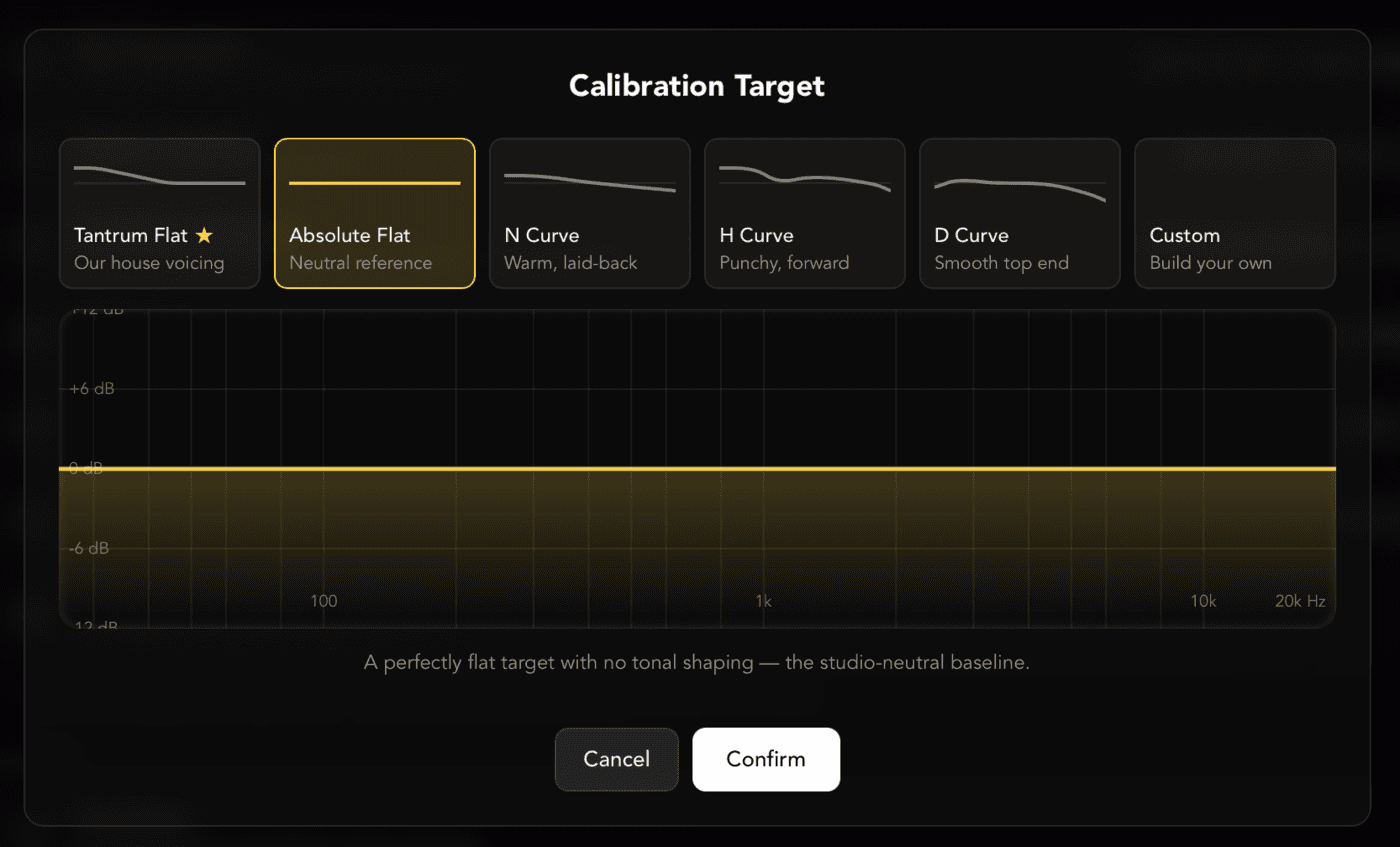
A target curve is the in-room response a correction system aims for, and the first thing to understand is that it is not flat. A good loudspeaker measures flat anechoically, but in a room the measured steady-state response tilts gently downward with frequency, because the room adds proportionally more reflected energy at low frequencies. That tilt is what a neutral system looks like at the microphone. Forcing the in-room measurement flat means boosting treble and cutting bass until a neutral speaker sounds thin and sharp. Research on listener preference, notably the Harman work, confirms the tilted shape, with debate confined to its exact slope and bass level.
What a Target Curve Is
Correction software measures your in-room response and generates filters to move it toward a reference shape. That shape is the target curve. Everything the correction does is relative to it, so the target embodies the answer to a question that sounds trivial and is not: what should a good system measure like in a room? The instinctive answer, flat from bottom to top, is wrong, and understanding why prevents the most common self-inflicted correction failure.
Why Flat In-Room Is the Wrong Target
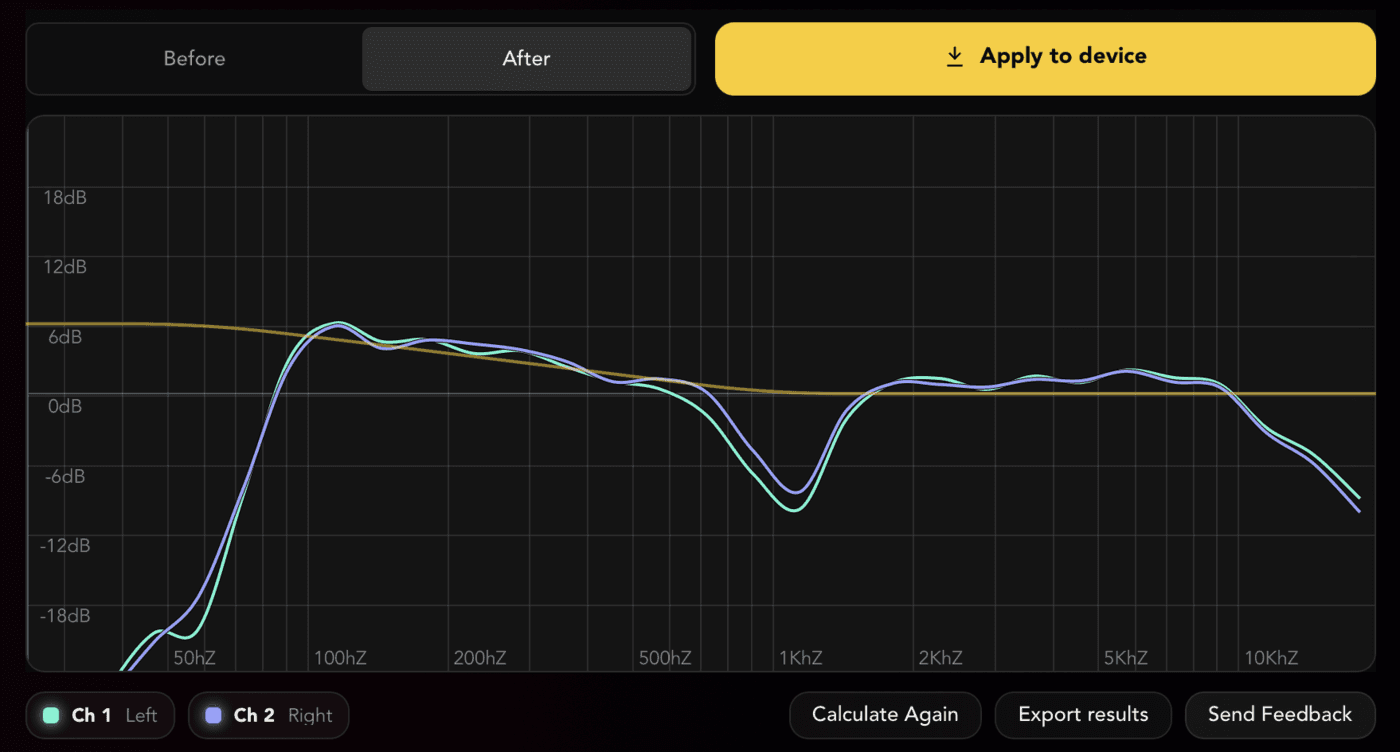
A loudspeaker's own design goal is a flat direct sound, measured anechoically on axis, with smooth behaviour off axis. Put that speaker in a room and the microphone no longer sees only direct sound. It sees direct sound plus everything the room returns, and the room returns more energy at low frequencies, where absorption is scarce and the speaker radiates in all directions, than at high frequencies, where directivity narrows and every soft surface absorbs. A steady-state measurement of a genuinely neutral system therefore tilts downward from bass to treble, typically in the region of half a decibel to a decibel per octave depending on the room and the speaker's directivity.
The ear develops in rooms and expects this. It hears the direct sound as the timbre reference and folds the room's contribution in as a sense of space and warmth. So when correction forces the steady-state measurement flat, it is not making the system neutral, it is tilting a neutral system upward: cutting the bass the room legitimately contributes and boosting treble until the direct sound is bright. The result measures perfectly and sounds thin, and it is the most common outcome of naive correction. The frequency response guide covers the related distinction between direct and steady-state response.
The research record supports the tilt. The Harman listening studies, among others, found listeners consistently prefer an in-room response that slopes gently downward, with a modest low-frequency shelf, and the pattern held across trained and untrained listeners. The debated territory is the size of the bass shelf and the exact slope, which is taste and program dependent, not whether the curve tilts.
Studio and Hi-Fi Targets
The purpose of the system moves the sensible target. A mixing or mastering room is a measuring instrument: decisions made there must translate, so the target stays conservative, the natural tilt with little or no added bass shelf, because a bass-rich monitoring target reads as a bass-light mix everywhere else. A hi-fi or listening room carries no translation duty, and a couple of decibels of additional low shelf is a legitimate preference rather than an error. Same physics, different stakes.
The other constraint on the target is the hardware. A target is an instruction set, and asking for extension the speakers do not have converts the instruction into boost, spent as amplifier power and driver excursion at frequencies the cabinet cannot reproduce. Small ported monitors roll off steeply below their tuning, and correction boost below that point produces distortion and port noise, not bass. Set the target's low-frequency limit at what the system genuinely delivers, and if more extension is wanted, that is a subwoofer decision, not a curve decision. Correction software with restraint built in will refuse the boost anyway, which is a feature, not a limitation.
Adjusting a Target in Practice
Start with the product's default tilted target, correct, verify, and listen to material you know deeply for several days before touching anything. If a change still feels warranted, adjust the low shelf in decibel steps and re-verify, and leave the top octaves alone, since steady-state treble at a microphone is a poor guide to perceived brightness and the direct sound there is already what the speaker's designer intended. Distrust any urge to make the measured line straighter for its own sake. The measurement serves the listening, not the reverse.
Rules of Thumb
Frequently Asked Questions
What is a target curve?
The in-room response shape a correction system aims for. Filters are generated to move the measured response toward it, so the target defines what the correction considers correct.
Should the target curve be flat?
No. A neutral speaker in a room measures with a gentle downward tilt because the room contributes proportionally more low-frequency energy. Correcting to flat cuts legitimate bass and boosts treble, producing a thin, bright result from a system that was neutral.
What is the Harman curve?
A family of preferred in-room response shapes from Harman's listening research, characterised by a gentle downward slope and a modest bass shelf. Its value is confirming the tilted shape listeners prefer. The exact slope and shelf size remain taste and program dependent.
How much downward tilt should I use?
Around 0.5 to 1 dB per octave in steady state is the usual region, with the room's liveness and the speaker's directivity moving the number. Product defaults sit in this range for good reason, and the sensible move is starting there rather than designing a curve from scratch.
Should a studio target differ from a hi-fi target?
In the bass, yes. Studio monitoring exists to translate, so it stays conservative with little or no added shelf. A listening room can carry a few decibels of low shelf as legitimate preference. The tilt itself belongs in both.
Can a target curve give my monitors deeper bass?
No. Below the cabinet's real extension a lower target just commands boost the drivers convert to excursion, distortion and port noise. Extension comes from a subwoofer, integrated and time-aligned, and the target then describes the combined system.
Why does my corrected system sound too bright?
Usually because the correction targeted flat, or corrected treble from a steady-state measurement. Both tilt a neutral direct sound upward. Restore the downward tilt and restrict correction to the region below the room's transition, and the brightness generally resolves.
Do I need a different target for different genres?
No. The target describes the system, not the material. If bass-heavy material tempts you toward a per-genre curve, that is a listening preference better served by a tone control than by re-correcting the room.
Conclusion
The target curve carries the definition of correct, and the physics has already chosen its shape: a gentle downward tilt, because that is what a neutral system measures in a real room. The genuine decisions are small, how much low shelf the system's purpose permits, and where the target must stop because the hardware does. A mixing room earns its keep by translating and stays conservative. A listening room may please itself within a few decibels. In both cases the target is bounded by what the speakers can deliver, adjusted slowly, and judged by ears on familiar material, with the measurement as the record of what was done rather than the reason for doing it.
Glossary
- Target curve
- The in-room response shape a correction system generates filters toward.
- Steady-state response
- The measured response including the room's reflected energy, which tilts downward for a neutral system.
- Room gain
- The rise in low-frequency level a room adds to a source, part of why in-room targets tilt.
- Bass shelf
- A broad low-frequency level adjustment in a target curve, the main legitimate taste variable.
- Harman research
- Listening studies establishing that listeners prefer a downward-tilted in-room response with a modest bass shelf.
Sign up to hear more when we release something new


