




What Crossover Frequency Should I Use?
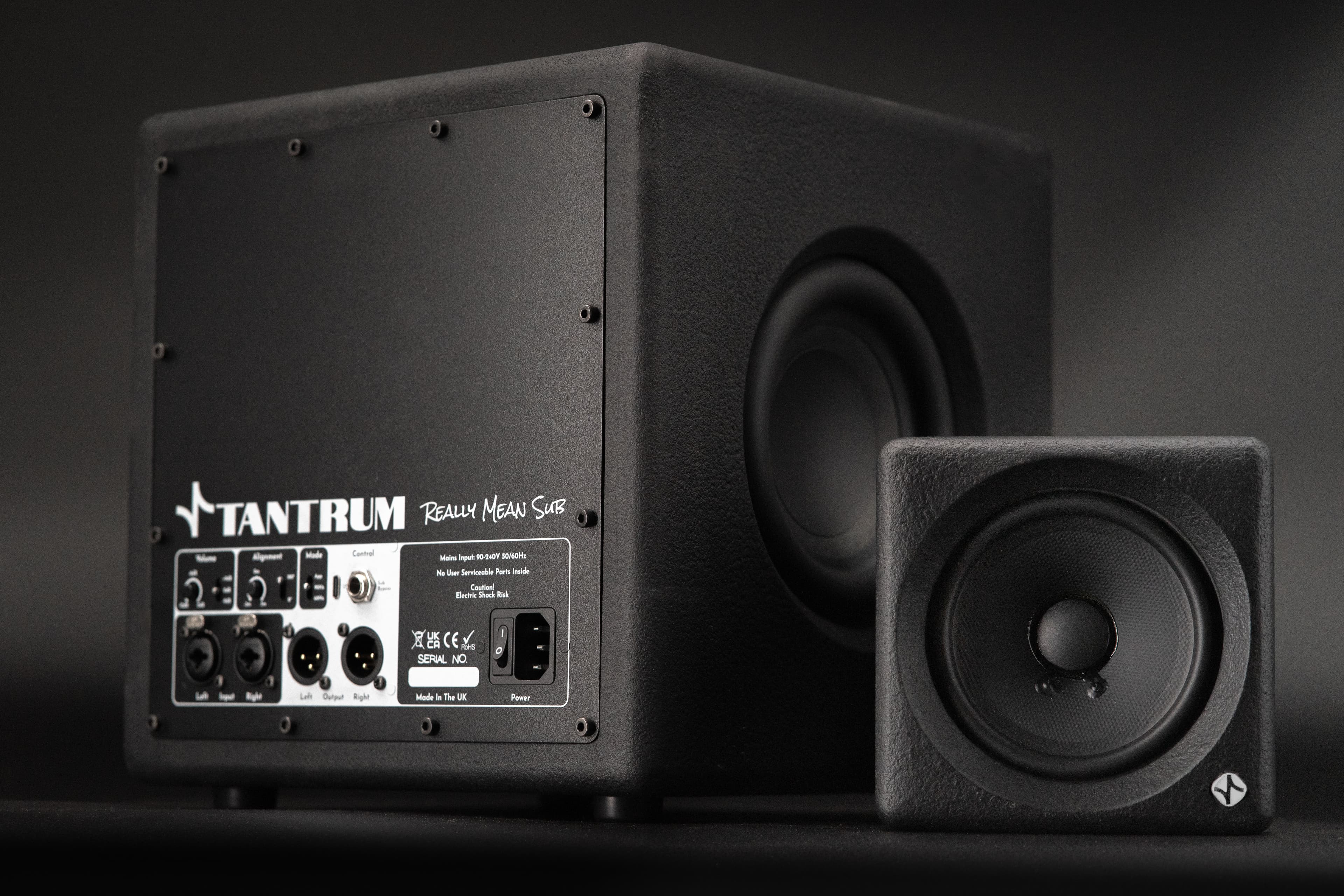
The crossover frequency is the point at which low-frequency content is handed from the main monitors to the subwoofer. It is chosen mainly from how low the mains play cleanly, so the handover sits where the mains begin to roll off, commonly somewhere between 60 and 100 Hz. Around 80 Hz is a frequent starting point because bass below it is hard to localise, which keeps the subwoofer from drawing attention to its position. Smaller mains cross higher, larger mains lower. The room and the crossover slopes also matter, so the right value is set by measurement and listening, not by a single number.
What the Crossover Does
A crossover splits the signal by frequency. Content above the crossover frequency goes to the mains, and content below it goes to the subwoofer. The aim is to let each speaker reproduce only the range it handles well, so the mains are relieved of deep bass that strains them and the subwoofer is not asked to produce midrange it cannot place.
- Crossover frequency
- The frequency at which content is divided between the main monitors and the subwoofer, with higher content going to the mains and lower content to the sub.
Choosing the Frequency
Start from the mains. Find where they begin to roll off, often quoted as the lower limit of their flat response, and set the crossover near there so the subwoofer fills in below. Setting it much higher asks the subwoofer to reproduce content that can be localised, which draws attention to the sub's position. Setting it much lower leaves a gap the mains cannot fill, thinning the bass.
| Main woofer | Starting crossover | Notes |
|---|---|---|
| 3 to 4 inch | 90 to 100 Hz | Small mains roll off high, so cross higher |
| 5 inch | 80 Hz | A common general-purpose starting point |
| 6.5 to 7 inch | 60 to 70 Hz | Larger mains reach lower, so cross lower |
| 8 inch and up | 50 to 60 Hz | Often only need a sub for the lowest octave |
Around 80 Hz is a frequent default because frequencies below roughly that point are hard for the ear to localise, so a subwoofer crossed there blends with the mains without revealing where it sits. Treat the table as a starting point and refine by measuring the combined response and listening to familiar material.
- Localisation
- The ear's ability to identify the direction a sound comes from. Below roughly 80 Hz localisation is weak, which is why subwoofers are usually crossed at or below that point.
Slopes and the Room
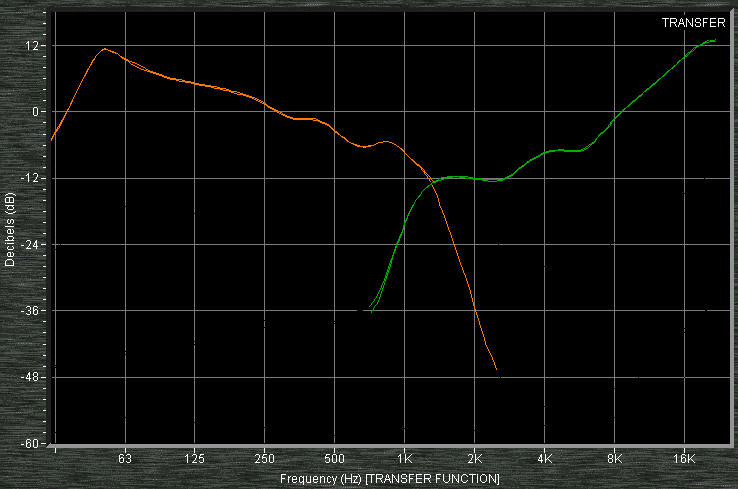
The crossover also has a slope, the rate at which each side rolls off, often 24 dB per octave. The mains' high-pass and the subwoofer's low-pass overlap around the crossover, and how they sum there depends on the slopes and on phase alignment. This is why the crossover frequency cannot be set in isolation from level and phase.
The room has the final say. Modes and boundary effects shape the response around the crossover, so a value that measures well in one room may need adjusting in another. Set a starting frequency from the mains, then measure the combined response at the listening position and adjust the frequency, slope and phase together for the smoothest handover. The full procedure is in the subwoofer integration guide.
Rules of Thumb
Frequently Asked Questions
What crossover frequency should I use for a subwoofer?
Set it near where your mains begin to roll off, commonly between 60 and 100 Hz. Around 80 Hz is a frequent starting point with typical 5 inch mains. Smaller mains cross higher, larger mains lower, and you should refine by measurement.
Why is 80 Hz a common crossover frequency?
Because frequencies below roughly 80 Hz are hard for the ear to localise, so a subwoofer crossed there blends with the mains without revealing its position. It is also near the roll-off of many common nearfield monitors.
How do I choose the crossover based on my monitors?
Find the lower limit of your mains' flat response and set the crossover near it, so the sub fills in below. As a guide, 3 to 4 inch mains cross around 90 to 100 Hz, 5 inch around 80 Hz, and larger mains lower.
What happens if the crossover is set too high?
The subwoofer is asked to reproduce content that can be localised, so you start to hear where the sub is, and the midrange can sound disconnected from the mains. Keeping the crossover at or below roughly 80 Hz avoids this.
What happens if the crossover is set too low?
The mains are asked to reproduce deep bass they roll off, and a gap can open between the mains and the sub, thinning the low end. Set the crossover where the mains can no longer keep up, not below it.
Does the crossover slope matter?
Yes. The slope, often 24 dB per octave, sets how the mains' high-pass and the sub's low-pass overlap and sum at the crossover. It interacts with phase alignment, which is why frequency, slope and phase are set together.
Should I set the crossover by ear or by measurement?
Start from the mains' roll-off, then measure the combined response at the listening position to set the final frequency, level and phase, and confirm by ear on familiar tracks. Measurement removes guesswork around the handover.
Does the room change the right crossover frequency?
It can. Room modes and boundary effects shape the response around the crossover, so a value that works in one room may need adjusting in another. Always verify the combined response in your own room.
Is there one correct crossover frequency?
No. It depends on your mains, the subwoofer, the room and the listening position. The table and 80 Hz default are starting points, and the correct value is the one that measures and sounds smooth in your setup.
Where can I learn the full subwoofer setup process?
See the subwoofer integration guide, which covers placement, crossover, level and phase or time alignment as a complete procedure, with measurement at each step.
Conclusion
The crossover frequency follows from your main monitors: place it near where they roll off so each speaker reproduces only what it handles well. Between 60 and 100 Hz covers most setups, with about 80 Hz a sensible default for typical nearfields and low enough that the subwoofer stays hard to localise. Smaller mains cross higher, larger mains lower. Because the slope, level, phase and the room all affect the handover, treat any number as a starting point and confirm the combined response by measurement and listening. The crossover is one part of integration, not a setting to fix on its own.
Glossary
- Crossover frequency
- The frequency dividing content between the mains (above) and the subwoofer (below).
- Crossover slope
- The rate, often 24 dB per octave, at which each side of the crossover rolls off.
- Localisation
- The ear's ability to judge direction, weak below roughly 80 Hz.
- High-pass
- A filter that removes content below a frequency, applied to the mains so the sub handles the bass.
Sign up to hear more when we release something new


