





Sealed vs Ported Studio Monitors
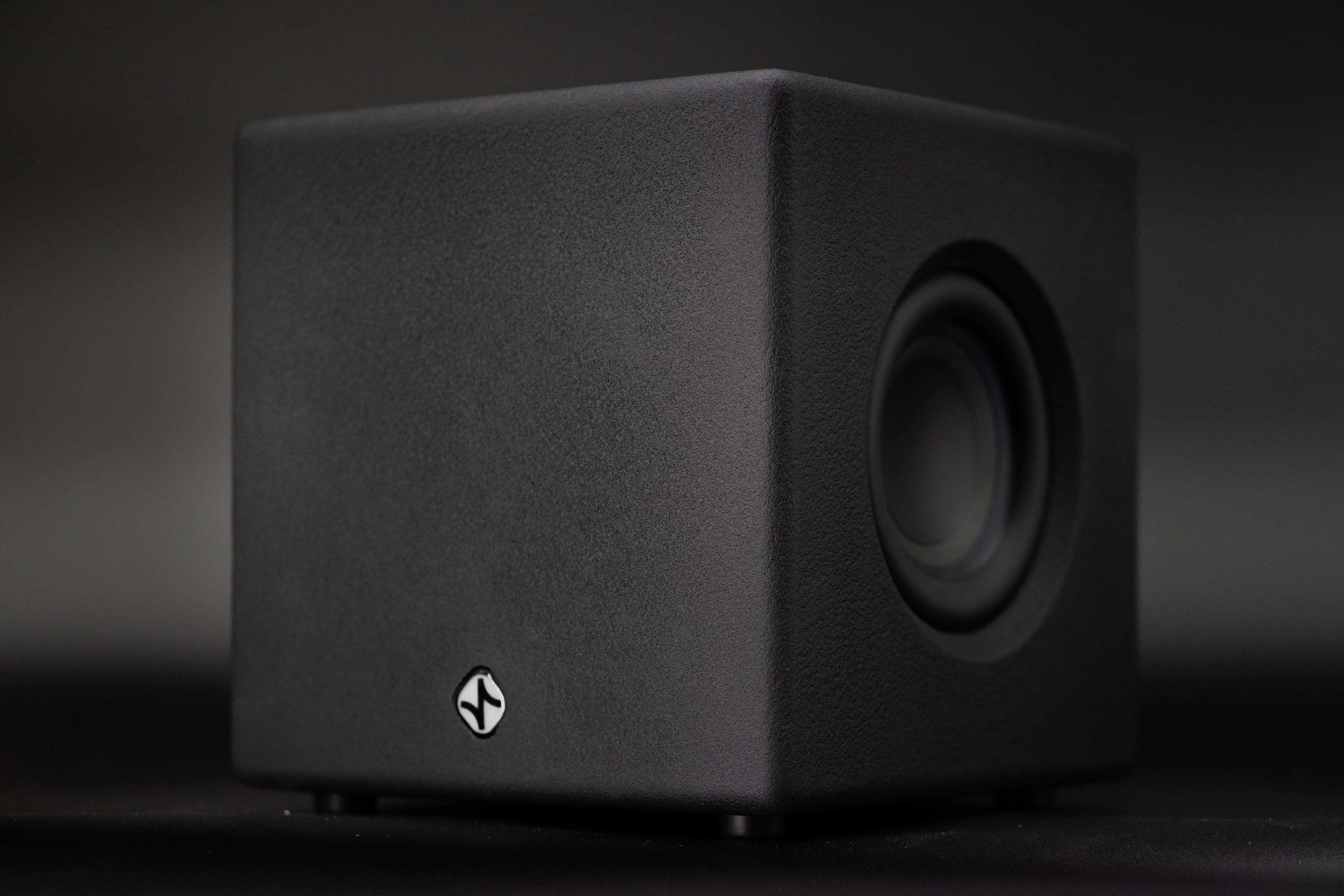
A sealed monitor uses a closed cabinet, while a ported (bass-reflex) monitor adds a tuned vent that uses the air inside the box to extend low-frequency output. The port buys roughly an extra half-octave of bass and higher output for a given driver and box size, at the cost of a steeper roll-off, more low-frequency group delay, and possible port noise at high levels. A sealed box gives a gentler roll-off and tighter transient and phase behaviour, trading some deep extension. For small rooms, where bass is already uneven, the sealed box's control is often the more useful choice, with a subwoofer added when deep extension is needed.
How Each Enclosure Works
A sealed enclosure traps the air behind the driver in a closed box. That air acts as a spring, controlling the cone and giving a smooth, gradual low-frequency roll-off of about 12 dB per octave.
- Sealed enclosure
- A closed monitor cabinet with no vent. The trapped air controls the cone, giving a gentle low-frequency roll-off of about 12 dB per octave.
A ported enclosure adds a vent tuned with the box to a chosen frequency. Near that tuning frequency the port radiates in phase with the driver and adds output, extending the bass. Below the tuning frequency the port unloads the driver and output falls quickly, at about 24 dB per octave, and the cone moves more freely, which can be a concern for excursion.
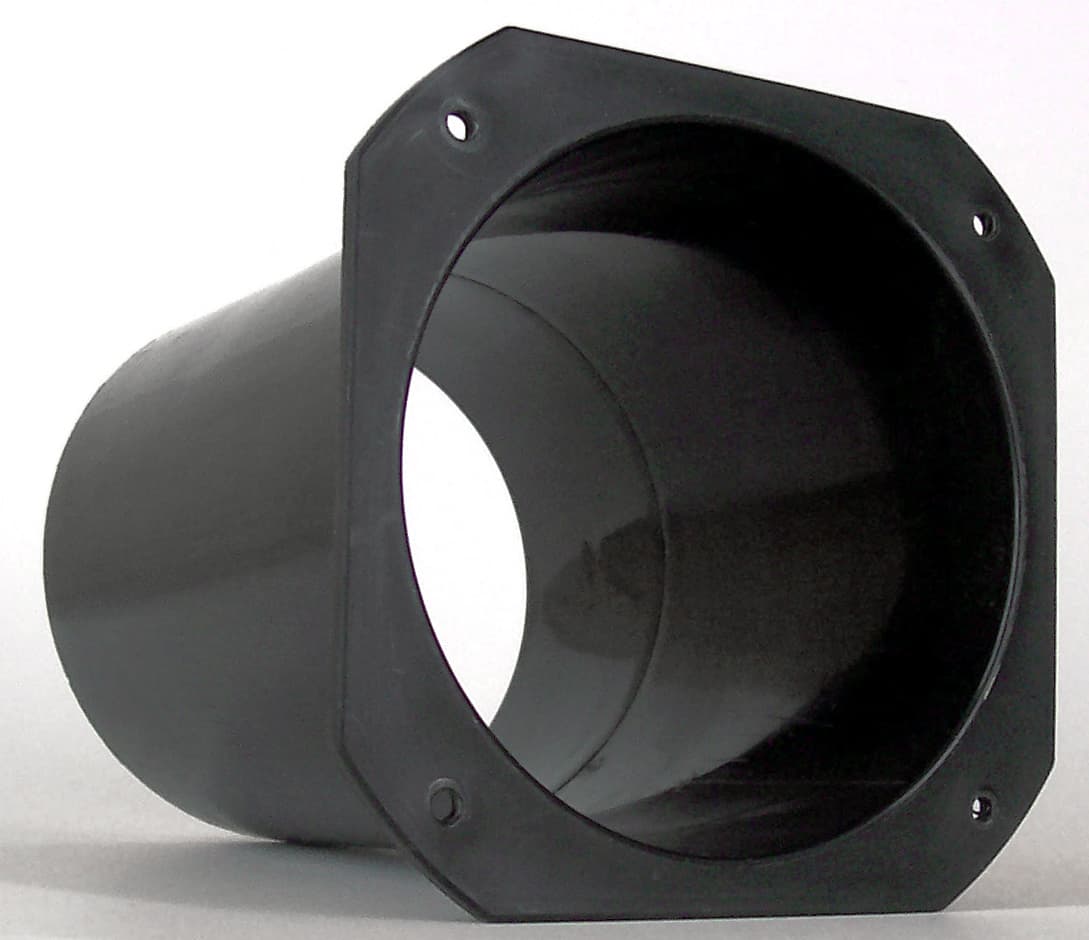
- Ported (bass-reflex) enclosure
- A cabinet with a tuned vent (a Helmholtz resonator) that adds low-frequency output near its tuning frequency, extending bass at the cost of a steeper roll-off below tuning.
The Trade-offs
The port is a genuine engineering gain in extension and efficiency, but it changes the time and phase behaviour of the low end. The added output near tuning comes with phase rotation and a group-delay peak, so the lowest notes lag the rest of the signal. A sealed box avoids that, giving a more time-accurate low end that many engineers describe as tighter.
| Sealed | Ported | |
|---|---|---|
| Low-end extension | Less for a given driver and box | More (about half an octave) |
| Roll-off slope | Gentle, about 12 dB/octave | Steep, about 24 dB/octave |
| Low-frequency group delay | Lower | Higher near tuning |
| Transient and phase accuracy | Tighter | Looser near tuning |
| Output and efficiency | Lower | Higher |
| Port noise at high level | None | Possible |
Practical differences also matter. A port can produce audible turbulence (chuffing) at high output if it is small or poorly designed. A sealed box has no port to misbehave, and its gentle roll-off interacts more predictably with a room and with a subwoofer crossover.
Which to Choose
In a small room the sealed box's control is often the more useful trait, because the room already exaggerates and unevens the low end, so forcing more deep output into it tends to make matters worse. A sealed monitor that rolls off gently, paired with a well-integrated subwoofer when you need the bottom octave, gives a tighter and more predictable result.
A ported monitor makes more sense when you need maximum low-end extension and output from a compact box, the room is larger or treated, and the music depends on deep bass you cannot otherwise reach. The choice is about matching the enclosure to the room and the work, not about one design being inherently superior.
Common Misconceptions
Ported monitors are better because they have more bass.
Ports add extension and output, but with a steeper roll-off and more group delay near tuning. In a small room that extra deep output often worsens an already uneven low end, so more bass is not automatically better.
Sealed monitors have weak or no bass.
Sealed monitors roll off more gently and reach a little less deep for a given box, but their bass is present and typically tighter. They trade a small amount of extension for better time and phase behaviour.
The port is just a hole to let air out.
The port is a tuned resonator that works with the box's air to radiate output near a specific frequency. Its dimensions set the tuning, and they change the whole low-frequency behaviour, not just airflow.
Frequently Asked Questions
What is the difference between a sealed and a ported monitor?
A sealed monitor uses a closed cabinet, while a ported one adds a tuned vent that extends low-frequency output using the air in the box. Sealed gives a gentler roll-off and tighter transients; ported gives more extension and output with a steeper roll-off.
Which is better for a small room?
Sealed designs are often the better fit, because a small room already exaggerates and unevens the low end. A sealed monitor's gentle roll-off and tighter low end interact more predictably with the room, with a subwoofer added if you need deeper bass.
Do ported monitors really have more bass?
They extend roughly half an octave lower and produce more output for a given driver and box, near the port tuning frequency. Below tuning the output falls quickly, so the extra bass is a band of extension rather than uniformly more bass everywhere.
Why are sealed monitors described as tighter?
Because they avoid the phase rotation and group-delay peak a port adds near its tuning frequency, so the lowest notes are reproduced with better timing. That time accuracy is what people hear as a tighter, more controlled low end.
What is port chuffing?
Audible turbulence noise from air moving quickly through the port at high output, more likely with small or poorly designed ports. A sealed box has no port and so cannot chuff.
Does a ported monitor's roll-off matter for mixing?
It can. The steep roll-off below tuning and the group delay near it affect how the lowest octave is reproduced and timed. For critical low-end decisions, a sealed monitor or a well-integrated subwoofer gives a more predictable reference.
Can I block the port to make a ported monitor sealed?
Plugging a port changes the tuning and roll-off and is not the same as a properly designed sealed box, since the driver and box parameters were chosen for the ported alignment. It can reduce port noise but is a compromise, not a true conversion.
Which pairs better with a subwoofer?
A sealed main with its gentle roll-off often integrates smoothly with a subwoofer, since the handover is predictable. Ported mains can also work, but their steeper roll-off and group delay near tuning make the crossover region more sensitive to set up.
Is sealed or ported more efficient?
Ported is more efficient near its tuning frequency, producing more output for the same driver and amplifier power. Sealed designs are less efficient in the deep bass, which is part of the trade-off for their gentler roll-off.
Does enclosure type matter more than the room?
Usually the room matters more, especially in the bass. Enclosure choice influences the low end, but placement and treatment shape what you actually hear at the listening position. Choose the enclosure to suit the room rather than expecting it to overcome the room.
Conclusion
Sealed and ported enclosures are two valid answers to the same problem of getting low-frequency output from a box. The port extends bass and raises output, at the cost of a steeper roll-off and more group delay near tuning. The sealed box trades some extension for a gentler roll-off and tighter time and phase behaviour. For small, untreated rooms the sealed box's control is often the more useful choice, with a subwoofer added when deep extension is required. Match the enclosure to your room, your music and whether a subwoofer is in the system, and measure the result in place rather than assuming one design wins.
Glossary
- Sealed enclosure
- A closed cabinet with no vent, giving a gentle low-frequency roll-off of about 12 dB per octave.
- Ported (bass-reflex) enclosure
- A cabinet with a tuned vent that extends low output near its tuning frequency, with a steeper roll-off below it.
- Port tuning frequency
- The frequency the port and box are tuned to, where the port adds the most output.
- Group delay
- The frequency-dependent time delay through a system; a port adds a group-delay peak near tuning.
Sign up to hear more when we release something new


