




Best Studio Monitors for Small Rooms: What to Look For
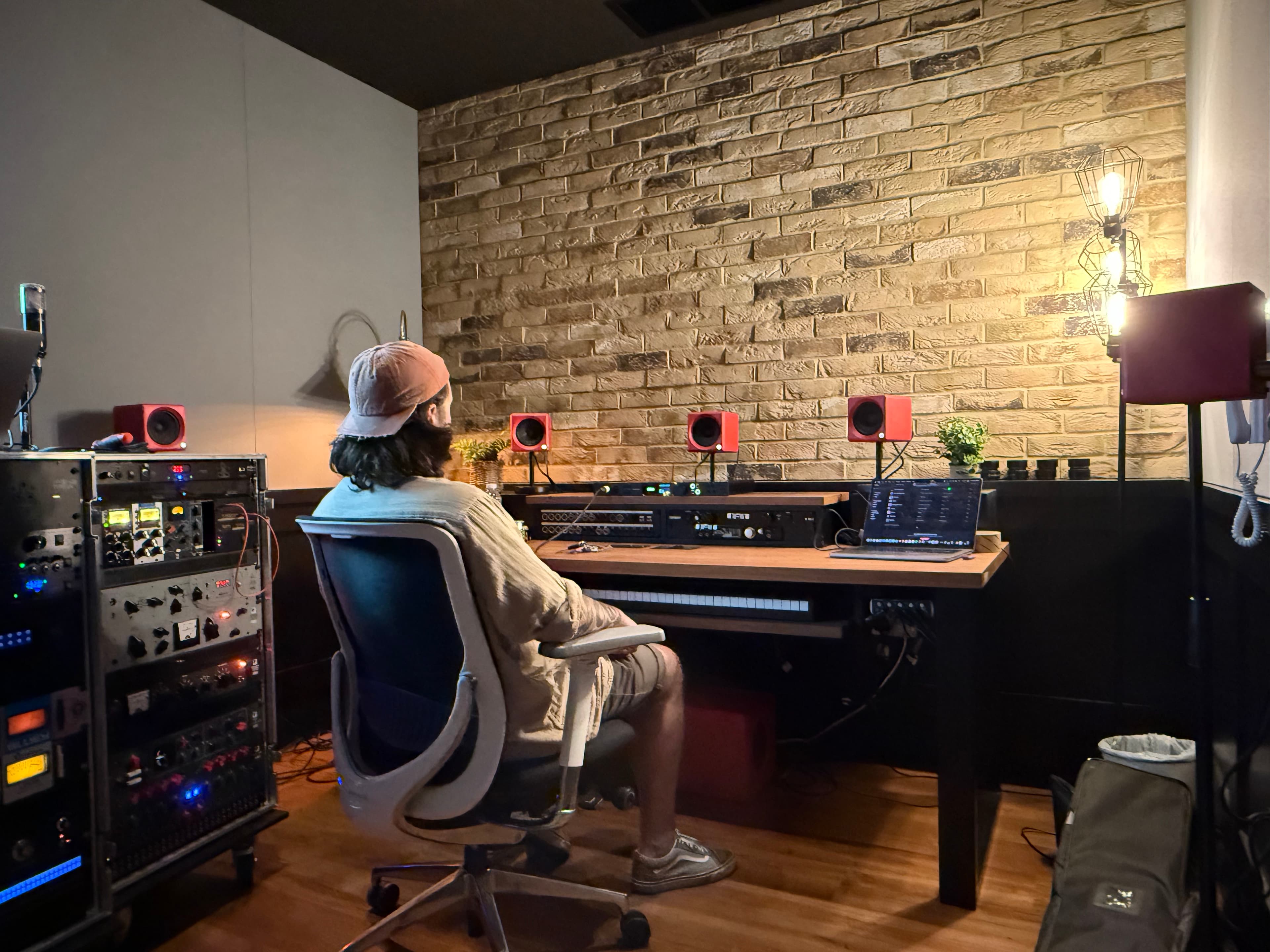
The best studio monitor for a small room is the one matched to the room, not the biggest or highest-output pair you can afford. Small rooms are listened to at close range and already struggle with bass, so the criteria that matter shift. They include a compact woofer that doesn't overload the room's modes, a controlled (often sealed) low end, coherent point-source-style imaging at short distances, appropriate rather than maximum SPL, controlled dispersion to limit reflections, and onboard DSP for response and room adjustment. This guide explains each criterion so you can evaluate any monitor against your own room rather than relying on a list of model names.
What a Small Room Changes About the Choice
Most monitor reviews are written as if the room doesn't exist. In a small room it dominates. Two things change the brief compared with a large control room.
First, you sit close, typically under about 1.5 metres, so you're listening in the nearfield, where the direct sound from the speaker dominates the room. That rewards coherence and accurate imaging over sheer output, and it means a physically large monitor can be overkill at the distance you actually use it.
Second, the room already mishandles bass. Small rooms have widely spaced, audible room modes and boundary cancellation that make the low end uneven. A monitor that pushes lots of deep, loud bass into that environment doesn't reveal the truth. It feeds the modes and makes the problem worse. The goal is a monitor that's honest in the range the room can actually support.
- Nearfield monitoring
- Listening at close range (roughly 0.7 to 1.5 m) so the speaker's direct sound dominates over the room's reflected sound, reducing the room's influence on what you hear.
The Criteria That Matter
Rather than memorising model names, judge any monitor against the things that matter in a small space.
- Woofer size and cabinet volume. A 3 to 5 inch woofer typically suits small rooms and short distances. Large woofers move more air and excite low modes harder than the room can handle.
- Sealed vs ported low end. Sealed designs roll off more gently and tend to give tighter, more time-accurate bass with less port-related phase delay, which is generally preferable where bass is already problematic. Ported designs extend lower but can exaggerate the very region a small room struggles with.
- Coherence and imaging. At short distances, a coherent source (single-driver or coaxial point-source designs) images precisely and stays consistent off-axis, which helps balance and translation decisions.
- Appropriate SPL. Pick output suited to a near listening position, not a stadium. Excess SPL capability is wasted in a small room and tempts you to mix too loud.
- Controlled dispersion. Predictable, even directivity means early reflections are a faithful copy of the direct sound, which matters more in untreated small rooms.
- Onboard DSP. Response trims and boundary or room-compensation filters let you adapt the monitor to a room you can't fully treat.
An example that fits the brief
Compact, sealed, point-source designs (Tantrum's Angry Box is one) are built around exactly these small-room priorities, with a single coherent driver, a sealed and tight low end, a modest footprint and onboard DSP, plus a subwoofer available when you need extension. It illustrates the criteria, and it is not the only option that meets them.
Why Smaller Woofers Often Suit Small Rooms
It feels counterintuitive that a smaller monitor can give better bass in a small room, but it follows from the acoustics. A big woofer in a ported cabinet delivers lots of energy in the deep bass, exactly where the room's modes and boundary cancellations are most severe. The result is loud but uneven bass that misleads your mix decisions.
A smaller, sealed monitor puts less energy into that troubled region and rolls off gently rather than trying to force deep extension the room will distort anyway. You hear a tighter, more honest low end, and your bass decisions translate better. When you genuinely need to hear the bottom octave, the cleaner solution is to add a properly placed, time-aligned subwoofer and treat the room, not to buy a bigger main monitor.
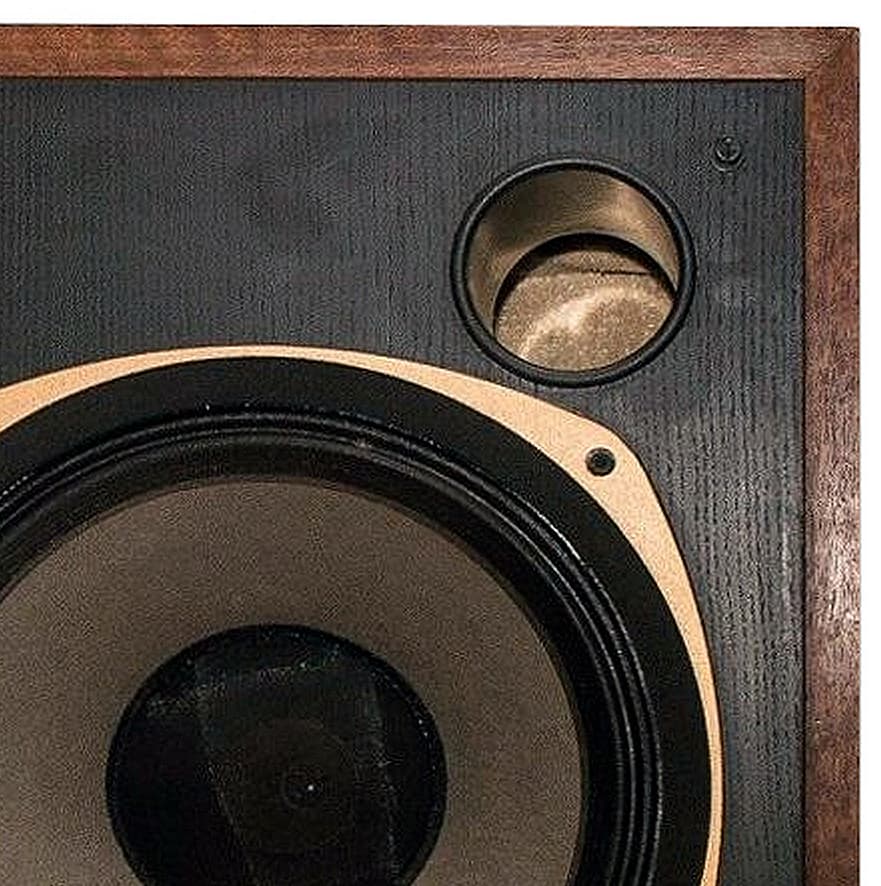
- Sealed enclosure
- A closed monitor cabinet with no port. It rolls off more gradually in the low end and avoids port-tuning phase delay, typically giving tighter, more time-accurate bass than a ported design of similar size.
Matching Monitor Size to Room and Distance
As a rough guide, match the woofer size to the listening distance and room. The table below is a starting point, not a rule, and treatment, taste and the music matter too.
| Room and distance | Typical woofer | Notes |
|---|---|---|
| Desk, under 1 m | 3 to 4 inch | Coherence and imaging over extension, sub optional |
| Small room, about 1 to 1.3 m | 4 to 5 inch | Sealed low end preferred, sub for deep work |
| Small room, about 1.3 to 1.5 m | 5 inch | Plenty for nearfield, avoid oversizing |
| Larger spare room, over 1.5 m | 5 to 6.5 inch | More extension usable if the room is treated |
Whatever you choose, place the monitors symmetrically with tweeters at ear height, form an equilateral triangle with your head, and mind the distance to walls. Good placement and a little treatment will do more for your sound than upgrading from a good small monitor to a bigger one.
Adding a Subwoofer and Room Correction
Any monitor works with room correction, because correction acts on the signal before it reaches the speaker. Pick the monitors on the criteria above, then pick the correction on what it does with a subwoofer. A sub added to small monitors only integrates if it is time-aligned to them at the crossover, and a sub that arrives a few milliseconds late cancels the mains' bottom octave instead of extending it.
Correction products split on exactly this. Sonarworks equalises but does not time-align a sub. Dirac Live does it with its Bass Control add-on. Omnissiah, Tantrum's own software, measures subs and mains together and aligns them on the corrected responses, on a Mac with any interface. NEXUS runs the same correction in hardware, so every source is corrected with no computer in the path. Our products, so weigh that, but the alignment question applies to whichever you choose.
Do's and Don'ts
- ✓Match the woofer size to your room and listening distance, often a 3 to 5 inch woofer for small rooms.
- ✓Favour a controlled, often sealed low end for tighter, more honest bass.
- ✓Prioritise coherence and imaging at the short distances small rooms are listened to.
- ✓Plan to add a subwoofer later if you genuinely need the bottom octave.
- ✕Don't buy the biggest pair you can fit and expect better results.
- ✕Don't chase a 20 Hz spec your room can't reproduce evenly.
- ✕Don't assume more watts or higher SPL means a better monitor for nearfield use.
- ✕Don't skip placement and treatment in favour of a more expensive monitor.
Frequently Asked Questions
What size studio monitors are best for a small room?
For typical small rooms and nearfield distances, a 3 to 5 inch woofer is usually the sweet spot. Smaller woofers excite the room's bass modes less, image well up close, and give a more honest low end than oversized monitors crammed into a small space.
Are sealed or ported monitors better for small rooms?
Sealed designs are often the better fit. They roll off the low end more gradually and avoid port-tuning phase delay, giving tighter, more time-accurate bass, which helps when the room already exaggerates the low frequencies. Ported designs reach deeper but can worsen small-room bass.
Do I need a subwoofer in a small room?
Not necessarily. Many small rooms can't reproduce the deepest bass cleanly. If you need to hear the bottom octave, a well-placed, time-aligned subwoofer paired with a compact main monitor, plus room treatment, is cleaner than buying larger main monitors.
Which room correction works best with a studio subwoofer?
One that time-aligns the sub to the monitors, not just equalises it. Dirac Live with Bass Control and Omnissiah both do. Sonarworks does not. The correction can run on the computer or in hardware such as NEXUS, which corrects every source, not only the computer's output.
How loud do my monitors need to be for a small room?
Less than you'd think. At nearfield distances you only use a fraction of a monitor's maximum output. Choose appropriate SPL for close listening rather than chasing the loudest pair, because excess output is wasted and tempts you to mix too loud.
Does point-source or coaxial design matter in a small room?
Yes. At short listening distances, coherent point-source and coaxial designs image precisely and stay consistent off-axis, which makes balance and translation decisions easier. Conventional two-ways may not have fully integrated their drivers at such close range.
Is onboard DSP worth having for a small room?
It's genuinely useful. Boundary and room-compensation filters, plus response trims, let you adapt the monitor to a room you can't fully treat. It complements acoustic treatment rather than replacing it.
Should I treat my room or buy better monitors first?
Treatment and placement usually give a bigger improvement than upgrading monitors, especially in the bass. Get a correctly sized monitor, then invest in placement and treatment before chasing a more expensive pair.
Can I use big monitors in a small room if I turn them down?
Turning them down doesn't fix the core issue. Their large woofers still push energy into the room's worst bass region, and you're sitting too close for them to integrate properly. A correctly sized monitor is the better tool.
What's more important in a small room, extension or accuracy?
Accuracy and coherence. A small room can't reproduce deep bass evenly, so honest, tight reproduction of the range it can support, plus precise imaging, does more for your mixes than chasing low-end extension.
How far from the wall should small-room monitors go?
It depends on the monitor and room, but distance to the front wall strongly affects boundary cancellation (SBIR), so it's worth experimenting. Many compact monitors offer a boundary or EQ setting for near-wall placement. Aim for symmetry and test a few distances by ear or measurement.
Conclusion
There's no single 'best' studio monitor for a small room, because the right answer depends on the room. The criteria are consistent, though. Match the monitor to your listening distance, favour a compact woofer and a controlled, often sealed low end, prioritise coherence and imaging over deep extension, choose appropriate rather than maximum SPL, and value onboard DSP in rooms you can't fully treat. Judge any monitor, Tantrum's or anyone else's, against those criteria, pair it with sensible placement and a little treatment, and add a subwoofer only when you genuinely need the bottom octave. That approach gives more honest, better-translating mixes than simply buying the biggest pair you can fit.
Sign up to hear more when we release something new


