



Hardware vs Software Room Correction
Room correction filters have to run somewhere, and where they run changes what the correction is worth day to day. Software correction on the computer is inexpensive and flexible, but it only corrects that computer's output, adds its latency to the monitoring path, and ties your calibrated monitoring to the state of a machine that updates, sleeps and crashes. Correction in hardware, whether inside the monitors themselves, a subwoofer or a dedicated processor, corrects every source identically, adds deterministic latency or none, and keeps working with no computer in the path. The trade has historically been flexibility, and modern DSP hardware controlled by software calibration removes most of it.
Where the Filters Live
Every correction product ends with filters processing your audio, and there are only a few places those filters can sit. On the computer, as a system-wide driver, a DAW plugin or a convolution player. In a box between source and amplifier, an AV receiver, a dedicated processor or a speaker-management DSP. Or inside the loudspeaker and subwoofer themselves, in the DSP that already runs their crossovers. The measurement and filter design can be identical in all three cases. What changes is everything around the filters: which sources get corrected, how much latency is added, and what has to be switched on and working for your monitoring to be calibrated.
Correction on the Computer
Software correction is inexpensive, quick to update and easy to A/B, and for a computer-only setup it can be the whole answer. Its limits are structural rather than qualitative. It corrects one device's output, so a turntable, a console, a synth played directly or a second machine all bypass it. It sits in the computer's audio path, so its latency stacks on the interface's buffers, and a plugin instance has to be remembered, and bypassed before rendering, on every project. It also couples monitoring accuracy to the most fragile component in the room. Operating system updates break drivers, sample-rate switches catch virtual devices out, and none of the correction exists until the machine is booted and the right software is running.
None of that makes software correction bad. It makes it conditional. If every source you will ever monitor is that one computer, and nobody tracks through the corrected path, the conditions are met and the low cost is attractive.
Correction in Hardware
Hardware correction inverts the trade. A processor or DSP-equipped speaker corrects everything passed through it, identically, whether the source is a computer, a console or a phone. Latency is fixed and known, and with minimum-phase IIR filters it is effectively zero. The correction is always on, survives reboots and updates, and cannot be accidentally left in a render. For a room where multiple people and multiple sources come and go, these properties matter more than any measurement refinement.
Correction inside the monitor or subwoofer itself is the strongest version of this. The speaker's DSP already implements its crossover, so correction there has access to each driver individually rather than to a finished full-range signal, and time alignment between drivers and between sources becomes part of one coherent filter set. This is how Omnissiah works with Tantrum's DSP monitors and subwoofers: the software measures and calculates on the computer, then writes the filters into the hardware, where they run with no computer in the playback path at all.
NEXUS: Tantrum's correction in a box
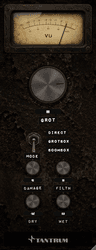
NEXUS is Tantrum Audio's hardware speaker processor. It runs Omnissiah's measurement-driven correction and time alignment onboard, so the same arrangement, calibrate with software, run in hardware, works with any monitors and subwoofers, not only ours. Details and pricing are on the NEXUS page.
The historical argument against hardware, that it is inflexible and hard to update, has mostly expired. Modern DSP hardware is recalibrated from software in minutes, holds multiple filter sets, and updates its behaviour as easily as a plugin. What remains true is that hardware costs money and software often does not, which is a fair reason to start in software and a poor reason to stop there.
Choosing for a Studio
Count your sources and your users. One computer, one user, playback only: software correction meets the conditions, and Sonarworks or a REW-plus-EQ chain does the job. More than one source, anyone tracking through the monitors, or monitoring you need to trust without checking what is running: the filters belong in hardware. The comparison guide covers which products run where. The generation of the filters, measurement quality, IIR versus FIR, alignment, matters in exactly the same way in both cases, and the choosing guide covers those criteria. The two decisions are independent, and the where decision is the one studios most often get by default rather than on purpose.
Common Misconceptions
Hardware room correction is the outdated option.
The inflexibility that earned that reputation is gone. Modern hardware DSP is calibrated and updated from software in minutes, and it retains the structural advantages software cannot reach: every source corrected, zero or deterministic latency, and no dependence on a computer's state.
A system-wide correction driver corrects everything I hear.
It corrects everything that computer plays. A console, turntable, hardware synth or second machine bypasses it entirely, and so does the computer itself whenever the driver breaks, the sample rate changes or the software is not running.
Correction in hardware means worse correction.
The filter mathematics is the same wherever it runs. Minimum-phase IIR correction in a speaker's DSP is the same filter it would be on the computer, minus the added latency and the dependency chain. Quality is decided by measurement and filter design, not by which chip executes it.
Plugin correction is fine because I'll bypass it when I render.
Everyone forgets once. A monitoring-path filter inside the project is a rendering accident waiting to happen, which is why correction belongs outside the project, in a driver at minimum and ideally in hardware after the interface.
Frequently Asked Questions
Is hardware or software room correction better?
The filters are equally good in either place. Hardware corrects every source with fixed or zero latency and no computer dependency, software is cheaper and corrects only that computer's output. One computer and playback-only monitoring suits software, everything else points to hardware.
Does hardware correction add latency?
Minimum-phase IIR correction in hardware adds effectively none, well under a millisecond. Hardware running long FIR filters adds the latency those filters imply regardless of the box. The filter type, not the location, sets the latency floor.
What hardware can run room correction?
AV receivers and processors with built-in correction, dedicated units like Trinnov processors and miniDSP boxes, speaker-management DSPs, and DSP-equipped monitors and subwoofers where correction runs alongside the crossover, which is how Tantrum's hardware works with Omnissiah.
Can I use software correction while tracking?
Only in a minimum-phase or zero-latency mode, and its delay still stacks on your interface buffers. Musicians monitoring themselves need the whole round trip under about ten milliseconds, which is why tracking rooms favour correction in hardware.
If my monitors have DSP, do I still need correction software?
You need software to measure and calculate, hardware to run the result. The DSP in the monitor is only as good as the filters written into it, so the calibration software and the hardware form one chain. Omnissiah and Tantrum monitors are designed as exactly that pair.
Does Tantrum make a standalone correction unit?
Yes. NEXUS is a hardware speaker processor that runs Omnissiah's correction and time alignment onboard, extending the calibrate-in-software, run-in-hardware arrangement to any monitors and subwoofers.
What happens to software correction when the computer sleeps or updates?
It stops existing until the machine is back and the software is running, and OS updates periodically break virtual audio drivers outright. Hardware correction has no equivalent failure mode, which is why monitoring you need to trust without checking favours it.
Conclusion
Decide where the filters run with the same care as how they are made. Software correction is conditional: right when one computer is the only source, nobody tracks through it, and its latency and fragility are acceptable. Hardware correction is structural: every source corrected, latency fixed or zero, calibration persistent. The strongest arrangement uses both halves for what they are good at, software for measurement and calculation, hardware for execution, which is the design Omnissiah and Tantrum's DSP hardware follow, and which NEXUS extends to any monitors and subwoofers.
Glossary
- Speaker-management DSP
- A hardware processor between sources and amplifiers that implements crossovers, delays and correction filters for a whole system.
- Virtual audio device
- A software driver that presents itself as a sound card so all system audio can be routed through processing such as correction.
- Deterministic latency
- A fixed, known delay that never varies with system load, a property of hardware DSP that computers cannot guarantee.
- Onboard DSP
- Signal processing built into a monitor or subwoofer, running its crossover, protection and correction filters.
Sign up to hear more when we release something new


