




Best Studio Subwoofers for Small Rooms
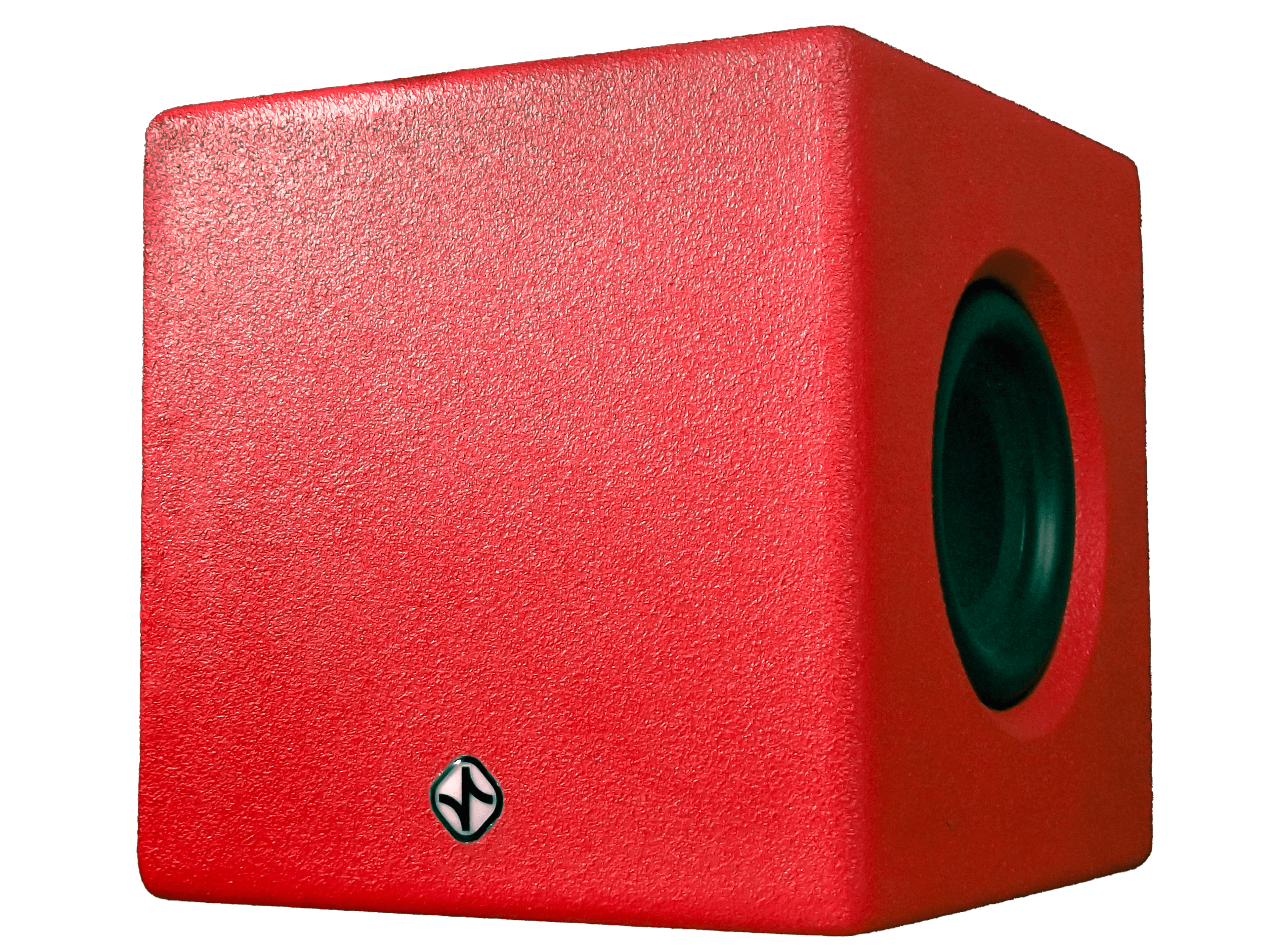
A subwoofer in a small room is an integration problem before it is a purchase. The room already mishandles the region the sub covers, so a sub that arrives untamed adds level exactly where the response is least reliable. What separates a useful studio subwoofer from a loud one is control: a sealed or well-damped low end, a genuinely adjustable crossover, phase or delay adjustment fine enough to time-align it with the mains, and enough output to do the job without being driven hard. This guide covers those criteria and the setup that decides whether the sub helps.
Why a Small Room Changes the Brief
The frequencies a subwoofer covers have wavelengths comparable to the room's dimensions. At 40 Hz a wavelength is around 8.5 metres, so a typical spare bedroom is a fraction of one cycle across. The room stops behaving like open space and starts behaving like a resonant box, with fixed pressure peaks and nulls that do not move when you change the speaker.
That has a direct consequence for buying. Output in this region is not information. Adding 6 dB of sub level raises the peaks and the nulls together, so the response you hear at the chair is just as uneven and now louder. The sub earns its keep by extending the range in which you can make decisions, and it only does that if the room has been given some help and the sub has been aligned to the mains.
- Room mode
- A resonance of the room at a frequency where reflections between surfaces reinforce, producing fixed regions of high pressure (peaks) and low pressure (nulls). The lowest axial mode of a dimension L is roughly 343 divided by twice L.
The Criteria That Separate Studio Subs
Most of a subwoofer specification is irrelevant in a small room. These are the parts that are not.
- Enclosure type. Sealed designs roll off gradually and keep their timing. Ported designs buy extension and add group delay near the tuning frequency, which lands in the region a small room is already smearing.
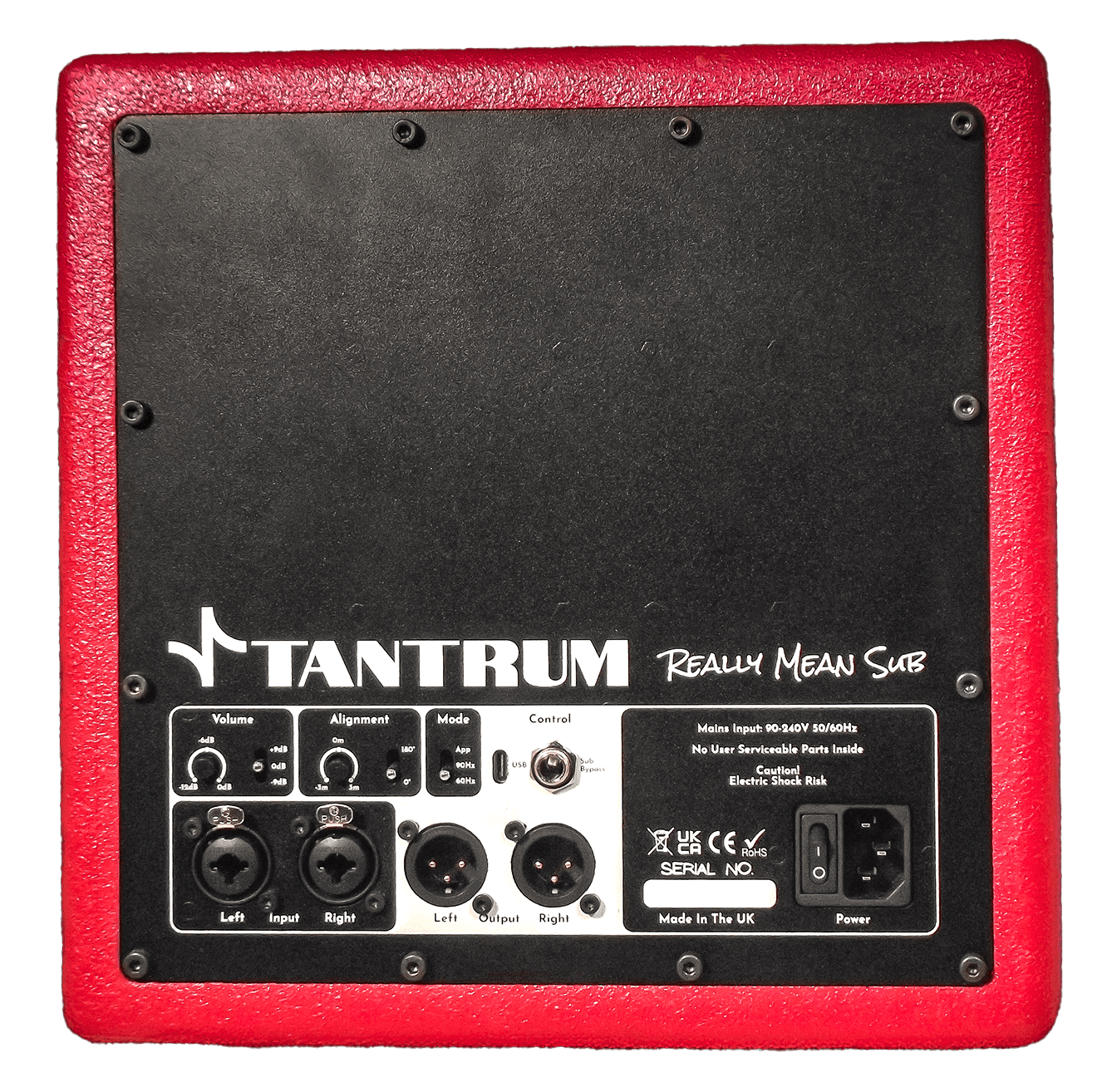
- Crossover adjustment. Continuously variable, not a three-position switch. You need to set the handover where your mains actually stop being flat, which is rarely a round number.
- Delay or phase alignment. Fine adjustment in milliseconds or degrees. A 0 and 180 degree switch cannot align a sub sitting a metre away from the mains.
- Headroom at your level, not maximum SPL. A sub that reaches its limit only at levels you never use will stay clean at the levels you do.
- Driver arrangement. Dual opposing drivers cancel the reaction force into the cabinet, so the box itself moves less and the floor and desk pick up less structural energy.
- A usable high-pass output for the mains, so the monitors are relieved of the bottom octave rather than duplicating it.
The specification that actually predicts the result
Not the lowest quoted frequency. The one that matters is whether the sub gives you enough adjustment to place the crossover and the arrival time correctly, because those two settings decide whether the sub and the mains sum or partly cancel through the handover region.
One Subwoofer or Two
Two subwoofers placed correctly can cancel some of a room's modal behaviour, which is why control rooms often have them. The technique depends on placing them to drive the room's modes out of phase with each other, and it needs measurement to get right.
In a small untreated room, two cheap subs usually give you two sources of the same uneven response rather than a cancellation. One better subwoofer, placed by measurement and properly aligned, is the more reliable purchase at a fixed budget. Revisit the two-sub question once the room is treated and you can measure the result.
The Setup That Decides Everything
The purchase is roughly a third of the outcome. The rest is placement, crossover and alignment.
- 1Place the sub by measurement rather than convention. The subwoofer crawl, where you put the sub at the listening position and move a microphone around the floor, finds the smoothest spot quickly.
- 2Set the crossover just above where the mains stop being flat, commonly 70 to 100 Hz for compact monitors, rather than at the lowest setting the sub offers.
- 3Align the arrival times. Adjust delay or phase until the response through the crossover region measures smoothest, not until it sounds loudest.
- 4Set the level with pink noise and a measurement microphone, then check against reference tracks you know.
- 5Re-measure after any change to the room, the desk or the seating position.
Common Misconceptions
A subwoofer will fix the weak bass in my small room.
The weakness is usually a null caused by cancellation, and adding level does not fill a null. A sub extends the usable range downward; it does not flatten the room.
Deeper is better, so buy the sub with the lowest quoted frequency.
Quoted extension is measured in conditions unlike your room. Adjustment range and control matter far more, because a sub you can align correctly at 35 Hz beats one you cannot align at 25 Hz.
Set the crossover as low as possible so the sub stays out of the way.
Crossing over too low leaves a dip between the mains rolling off and the sub coming in. Set the handover just above where the mains stop being flat.
Frequently Asked Questions
Do I need a subwoofer in a small studio?
Only after the room has some bass trapping and the mains are placed properly. In an untreated small room a sub usually makes the low end less trustworthy, because it adds energy to the modes that are already causing the unevenness.
Sealed or ported subwoofer for a studio?
Sealed, in most small rooms. It rolls off gradually and keeps its timing, which makes the low end easier to judge. Ported subs reach lower and ring longer near the tuning frequency, which is the wrong trade in a room that already rings.
Where should a studio subwoofer go?
Where it measures best, which is rarely the corner and rarely symmetrical. Put the sub at the listening position, play a sweep, and move a measurement microphone around the likely locations at floor level. The position with the smoothest response is where the sub goes.
How do I know if my subwoofer is aligned?
Measure the response through the crossover region with the sub on and off. If the combined response dips where the two overlap, the arrival times are wrong. Adjust delay or phase until the overlap sums smoothly.
Should I use one subwoofer or two?
One, at typical home budgets. Two correctly placed subs can cancel modal behaviour, but that is a measured technique for a treated room. Two cheap subs in an untreated room usually just double the existing problem.
Conclusion
Buy a studio subwoofer on the quality of its low end and the range of its adjustment, not on its quoted extension or its output. Treat the room first, place the sub by measurement, set the crossover just above where the mains give up and align the arrival times before you trust anything you hear. The honest limit: a subwoofer widens the range in which you can make decisions, and in an untreated small room that range is still narrower than you would like.
Glossary
- Subwoofer crawl
- A placement method: put the subwoofer at the listening position, play a low-frequency sweep, and move a microphone around the floor. Where the response measures smoothest is where the subwoofer goes.
- Dual opposing drivers
- Two drivers mounted facing opposite directions and mechanically coupled, so the reaction forces cancel inside the cabinet and less energy is transmitted into the structure around it.
Sign up to hear more when we release something new


