




Choosing A Measurement Microphone
All four are omnidirectional condensers on the end of an XLR, and all four will measure a room. They differ in how precisely, and in what you know about the individual microphone in your hand.
| Behringer ECM8000Budget, no offsets | Sonarworks XREF20Same kind of mic, with offsets | StandardTMM9000Ours, with offsets | PrecisionEarthworks M23RPrecise by design | |
|---|---|---|---|---|
| Price | About £17 inc VAT | $99 inc tax direct, about £75 | £70 inc VAT | £570 inc VAT |
| Calibration Offsets | None supplied | Individual, downloadable | Individual, downloadable | Not required |
| What You Know About Your Unit | The response quoted for the model. | Its own response, measured against an ANSI-certified reference. | Its own response, measured one at a time against a reference. | The published spec, because every unit is matched to within ±0.5dB. |
| Off-Axis Profiles | None | 0°, 30° and 90° | On axis | Not applicable |
| Published Figures | Under 2dB deviation, 20Hz to 20kHz, quoted for the model. | ±0.9dB measurement accuracy inside SoundID Reference. | A per-unit file rather than a published curve. | 3Hz to 23kHz ±0.5dB. 140dB max input. 20dB noise floor. -20 to 60C. |
| Connection | XLR, 15V to 48V phantom | XLR, 48V phantom | XLR, 48V phantom | XLR, 24V to 48V phantom, 10mA |
| Best For | Seeing what your room is doing, cheaply. | Correcting a room, inside SoundID Reference or out of it. | Correcting a room, with offsets measured on your own unit. | Precision work, and a microphone that holds its spec for decades. |
All four will show you your room. What separates them is how precisely, and how that precision is arrived at: quoted for the model, measured on your unit and supplied as offsets, or built in from the start.
Competitor prices and specifications are from published manufacturer and retailer information as of September 2026 and will change. The Earthworks figure is our price for it, as the NEXUS precision package. Prices include VAT where the seller quotes it that way.
Standard or Precision, you decide.
NEXUS, the room correction box that uses the measurement, comes with the TMM9000 as standard or the Earthworks M23R in the precision package. Leave your email and we will keep you posted.
Almost every measurement microphone under £100 is built the same way: a small electret omni capsule in a thin tube, phantom powered, XLR out. The Behringer, the Sonarworks and the TMM9000 are all that kind of microphone. It is a sound design, and it is the reason a usable room measurement costs so little.
A calibration file is a list of frequencies and corrections your software subtracts, so the plot shows the room rather than the room plus the microphone. Measured on your own unit, it describes your unit rather than the average of a batch. Sonarworks supply one with theirs and we supply one with ours. That is what takes a capsule of this kind to the right answer for most rooms.
Budget, Standard, Precision
Behringer ECM8000
The ECM8000 is a perfectly good measurement microphone and it will show you what your room is doing: the modes, the nulls, the timing between your speakers. What it is not is the most precise. Behringer supply no offsets for your individual unit, so the microphone's own response stays mixed in with the room's, and that shows at the ends of the range rather than through the middle. At about £17 it is the cheapest honest look at a room there is.
TMM9000 And Sonarworks
Both use the same kind of capsule as the Behringer, and both supply calibration offsets measured on your individual unit. That is what takes a capsule of this kind to the right place for the majority of people. Every TMM9000 is measured beside a calibrated reference in a calibrated enclosure, with the file stamped to its serial number; Sonarworks measure theirs against an ANSI-certified reference and profile three angles. The TMM9000 is £70, and it is the microphone NEXUS ships with as standard.
Earthworks M23R
The M23R is precise by design rather than by correction. Every unit meets its published specification out of the box, flat within ±0.5dB from 3Hz to 23kHz, with no file to load. It takes 140dB before it runs out of headroom, its own noise sits at 20dB SPL A-weighted, and it works from -20 to 60C. It is built to hold that specification for decades, and it is the precision option on a NEXUS.
Measured Against A Reference, One At A Time.
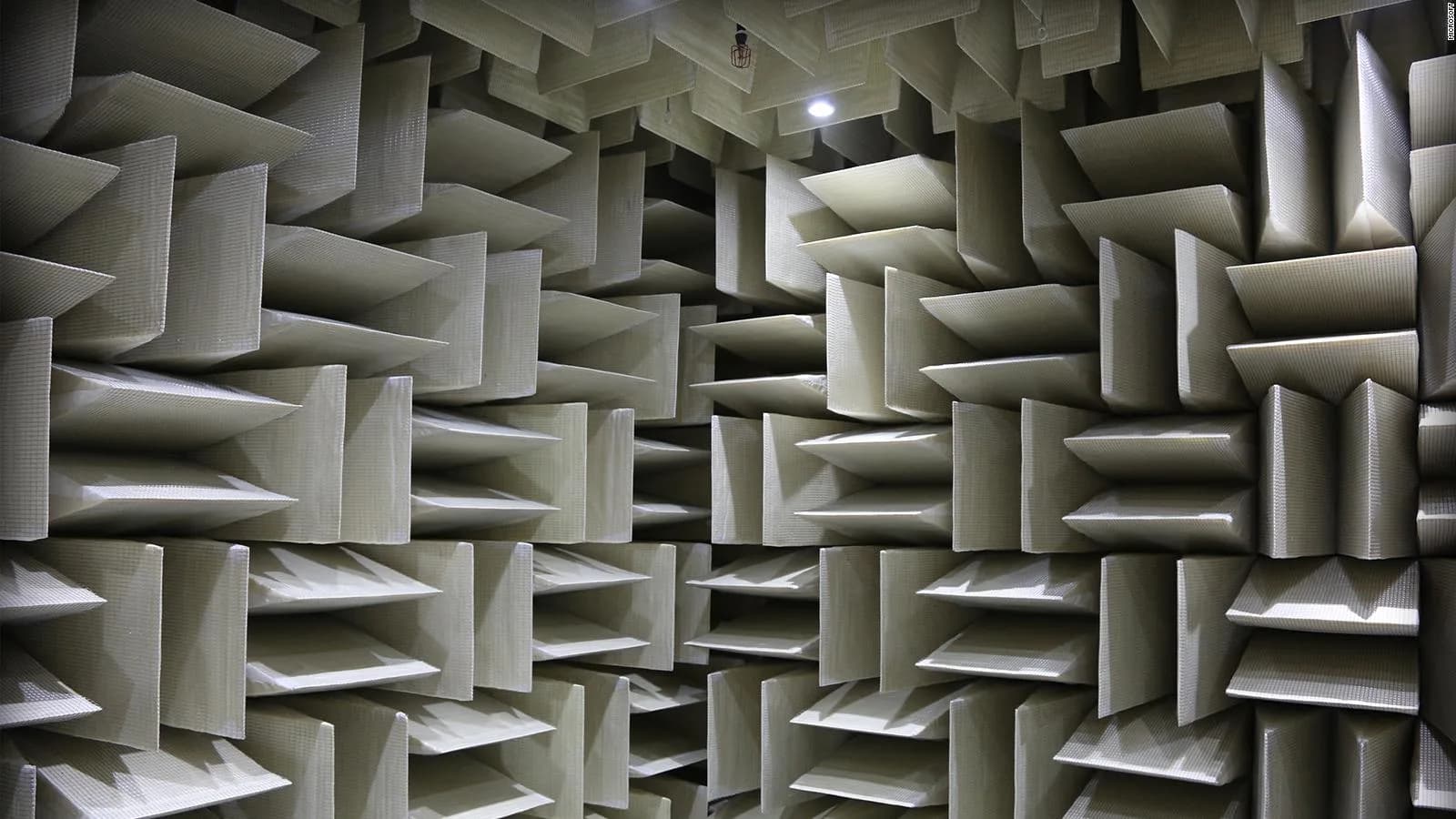
Each TMM9000 is measured beside a calibrated Earthworks M50, a lab grade $1,000+ reference microphone, in a calibrated measurement enclosure. Same source, same distance, same moment. The difference is saved as a text file: a list of frequencies and corrections, stamped with the serial number. You download it.
Asked Before You Did
Is the Behringer ECM8000 good enough for room correction?
For seeing what your room is doing, yes. Capsules of this kind are at their most accurate through the midrange, where most room trouble lives, and usually sit within a decibel or two there. They are least accurate at the ends of the range: down low, where the capsule vents, and up top, where the body of the microphone starts to matter. Without offsets those errors stay mixed in with the room's, which is the argument for a calibrated microphone rather than any fault in this one.
Is the Sonarworks microphone just a rebadged Behringer ECM8000?
They are the same kind of microphone and they look alike, and plenty of people online say they are the same part. We have not taken both apart, so we are not going to claim it. What is documented is the calibration: Behringer supply no offsets for your unit, and Sonarworks measure every microphone against an ANSI-certified reference and supply profiles for 0, 30 and 90 degrees, TXT included. We do the same, one microphone at a time, at £70. The money above the Behringer buys the calibration rather than a different capsule.
Do I need a calibrated microphone for room correction?
It depends on what you are going to do with the measurement. Looking at a room, any of these will show you the modes and the timing. Correcting one, the calibration matters: uncalibrated, the microphone's response cannot be separated from the room's, so a correction built on it also corrects for the microphone. A per-unit file removes that. A model-average file removes most of it.
Does the TMM9000 calibration file only work in Omnissiah?
No. It is a plain text list of frequencies and corrections, the format every measurement program reads. Omnissiah, REW, Smaart and ARTA all take it. Nothing about the microphone is locked to our software.
Which microphone comes with a NEXUS?
The TMM9000 is the standard package microphone, so a NEXUS arrives able to measure the room the day it lands. The precision package swaps it for an Earthworks M23R. The box on its own is the third option, for anyone who already owns a measurement microphone, because Omnissiah measures through any of them.
Can I use the measurement microphone I already own?
Yes. Omnissiah works with any measurement microphone and reads any calibration file in the usual text format. Buy one of these if you do not have one, or if you want the file to describe your microphone rather than the average of a batch.


