




Best Budget Studio Monitors Under £500
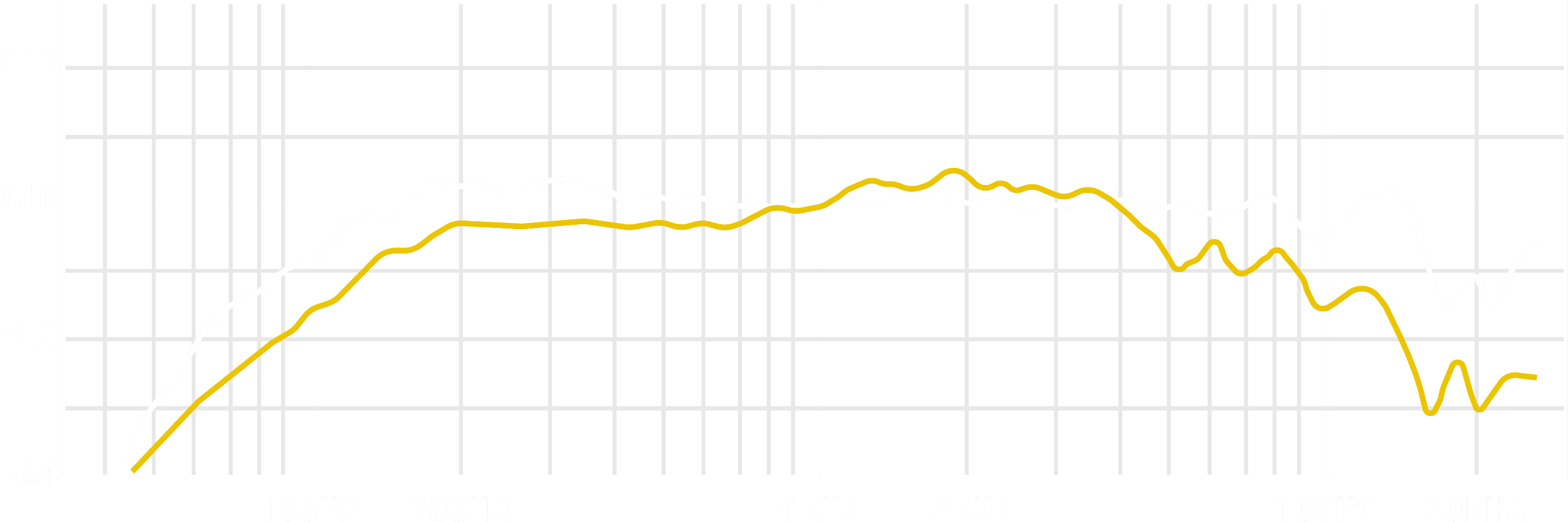
Under £500 a pair you are buying a competent ported two-way with a few compromises you can work around, and the differences between the credible options are smaller than the difference your room and your placement make. That has a practical consequence: a fixed budget spent entirely on monitors usually gives a worse result than the same budget split between monitors, a pair of stands and some absorption. This guide covers what the money buys at this level, which compromises matter, and how to split a fixed amount for the best outcome.
What the Money Buys at This Level
Under £500 a pair, nearly everything credible is an active ported two-way with a 4 to 6 inch woofer, a soft dome or ribbon tweeter, a Class D or AB amplifier per driver and a small number of rear-panel trim switches. The engineering effort has gone into getting that arrangement to behave, and it mostly does.
What you are not buying is tight unit-to-unit matching, a sealed or coaxial design, meaningful boundary compensation, or the driver tolerances that make a monitor consistent off axis. Those are the things the next band up spends money on, and they are the things that matter most in an untreated room, which is the awkward part of shopping at this level.
You are also usually buying a lifted low end. It sells in a shop demo and it is the single most common cause of bass-light masters, because you mix the bass down to compensate for a lift your listeners do not have.
What to Shortlist
Prices move, so treat these as the options people actually cross-shop rather than a ranking with a winner.
| Monitor | Design | The compromise |
|---|---|---|
| Yamaha HS5 | Ported two-way, 5 inch | Conservative voicing and a well known midrange. Low end is modest, which is honest rather than a fault. |
| JBL 305P MkII | Ported two-way, 5 inch, waveguide | Wide sweet spot for the money. Port noise at high level. |
| KRK Rokit 5 G4 | Ported two-way, 5 inch, DSP presets | Lifted low end by reputation, partly addressable with the onboard presets. |
| PreSonus Eris E5 | Ported two-way, 5 inch | Useful acoustic tuning controls on the rear. The least specified drivers of the group. |
| ADAM T5V | Ported two-way, 5 inch, ribbon tweeter | Detailed top end. Still a ported two-way, with the timing behaviour that implies. |
The single-driver cubes sit outside this comparison. An Auratone 5C or an Avantone MixCube is a midrange reference rather than a full-range monitor, and is bought as a second check alongside a main pair rather than instead of one.
How to Split a Fixed Budget
If £500 is the total rather than the monitor budget, the split matters more than the model.
- 1Monitors, roughly 70 percent. A competent pair from the table above.
- 2Stands or decouplers, roughly 15 percent. Getting the tweeters to ear height and off the desk surface removes a comb filter you otherwise mix through.
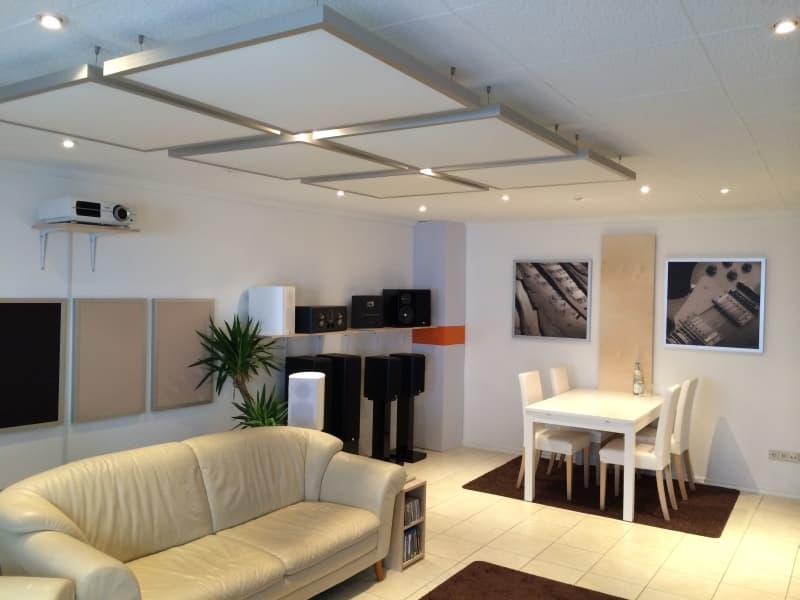
- 3Absorption, roughly 15 percent. Two broadband panels at the first reflection points, or one panel and a corner trap if the low end is the worse problem.
That split gives up one tier of monitor and buys back more than a tier of accuracy at the listening position. The reason is simple arithmetic: the errors a small untreated room imposes are larger than the differences between any two monitors in this band.
Do's and Don'ts
- ✓Set the tweeters at ear height and form a rough equilateral triangle with your head.
- ✓Pull the monitors away from the wall behind them, or use the rear-panel boundary trim if pulling them out is not possible.
- ✓Plug the ports, or use the low trim, if the monitors have to sit close to a wall.
- ✓Buy used from a seller who will let you listen. Monitor faults are audible in the first minute.
- ✓Keep a reference track you know well and check against it every session.
- ✕Do not spend the whole budget on the speakers and nothing on stands or treatment.
- ✕Do not buy the pair with the most impressive low end in the shop. It is the one most likely to make your masters bass-light.
- ✕Do not put monitors directly on the desk surface without decoupling them.
- ✕Do not buy 8 inch monitors because they are the same price as 5 inch ones. In a small room the extra woofer is a liability.
- ✕Do not judge a monitor on a specification sheet. Anechoic figures say very little about your room.
Frequently Asked Questions
Are cheap studio monitors good enough to mix on?
Yes, with checking habits. Monitors in this band are competent and predictable. The limiting factor in almost every home setup is the room, not the speaker, so a modest pair in a treated corner will out-mix an expensive pair in a bad position.
Should I buy 5 inch or 8 inch monitors on a budget?
5 inch, in almost every small room. The 8 inch monitor puts more energy into the region your room handles worst, and at typical home listening distances you cannot use the extra output.
Is it better to buy used monitors at a higher tier?
Usually yes. Monitors age well, the failure modes are audible immediately, and buying used moves you up roughly one band for the same money. Listen before you buy and check for port noise and driver rattle at level.
Do budget monitors need a subwoofer?
Not in a small untreated room. Most monitors in this band roll off around 50 to 60 Hz, which is close to where an untreated small room stops being reliable anyway. Treatment first, then consider a sub.
What else do I need besides the monitors?
Stands or decouplers to get them to ear height and off the desk, balanced cables of the right type, and some absorption. An interface with balanced outputs if you do not already have one.
Conclusion
Under £500 the monitor choice is the least consequential decision in the chain, which is liberating rather than depressing. Pick a competent pair with a conservative low end, spend part of the budget on getting them to ear height and treating the first reflections, and put the difference into checking your work against references. The limit to be honest about: nothing at this price is a reference, and mixes made on any of these monitors still need verifying on other systems before you trust them.
Sign up to hear more when we release something new


