


Do You Need a Distortion Plugin?
Your DAW almost certainly includes saturation, a clipper and some form of amplifier emulation, and for a large share of the work that is enough. A dedicated distortion plugin earns its place when you want a specific behaviour the stock tools do not model, when you need control over the filtering inside the distortion, or when you want a sound that comes from mechanical failure rather than electrical clipping. This guide sets out what stock tools genuinely cover, what they do not, and how to tell which you need before buying anything.
What Your DAW Already Does
It is worth being specific, because the answer is more than people assume.
Every current DAW ships some saturation, which handles weight and bus glue perfectly well. Most include a clipper, which handles attack. Several include valve and tape emulations that are competent at what they model. Put any of those on a parallel send with a filter in front of it and you have covered the majority of everyday drum and bass distortion work.
What stock tools tend not to give you is control over what happens inside the distortion. A fixed emulation applies its own filtering before and after the non-linearity, and that internal shaping is the thing that decides whether the result sounds like weight or like fizz. Dedicated plugins usually expose it.
What They Cannot Reach
One family of sounds genuinely sits outside what saturation and EQ produce, and it is the reason a fair number of distortion plugins exist.
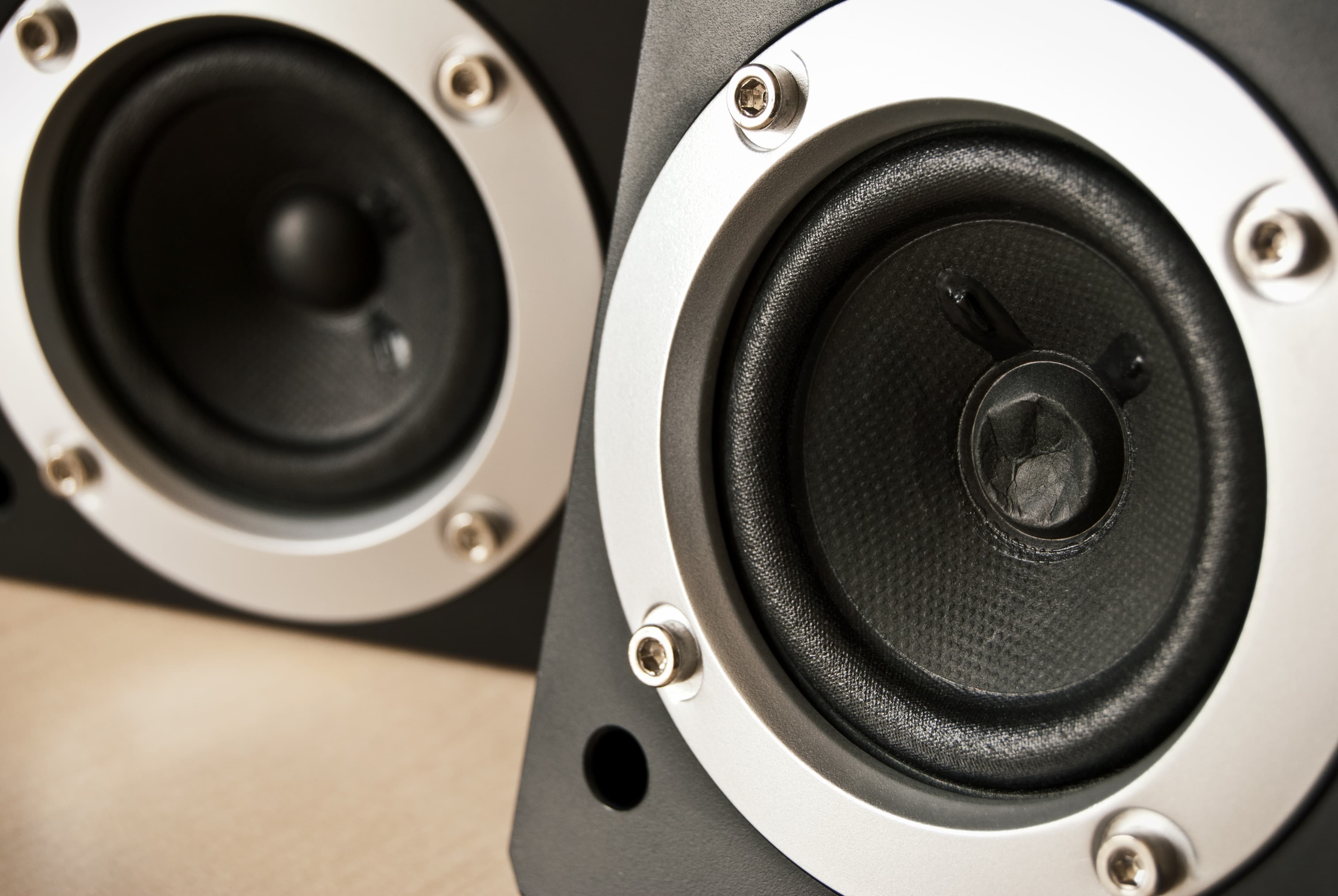
An electrical distortion clips a waveform. The harmonics it generates are related to the input in a fixed way, and the result is broadly predictable from the drive and the filtering. A loudspeaker pushed past its limits does something else: the cone stops moving as a single piece and begins to flex, the suspension runs out of travel, and the cabinet around it resonates. The output is resonant, midrange-forward and behaves differently depending on how hard and how low you drive it.
That is a mechanical failure rather than an electrical one, and it is not reachable by saturating a clean signal and equalising afterwards, because the resonances move with level. If the sound you are after is a speaker giving up, that is the family to look at.
Deciding Without Spending
The question answers itself in an afternoon with what you already own.
- 1Take the source that prompted the question and set up a parallel send with your DAW's saturation on it.
- 2Put a high-pass filter before the saturation and sweep it. Notice how much of the character is coming from what you feed it rather than from the drive.
- 3Match levels and blend the send under the clean signal until it does what you wanted.
- 4If you got there, you did not need a plugin, and you learned the filtering trick, which is the transferable part.
- 5If the result is close but lacks a resonant, midrange character that you cannot equalise into it, that is the speaker-breakup family and it is the case for buying something.
The same test applies to bitcrushing and sample-rate reduction, which most DAWs also include in some form. If the stock one gets you there, the paid one is buying you control rather than a sound you could not otherwise have.
Rules of Thumb
Frequently Asked Questions
Is stock DAW saturation good enough?
For weight and bus glue, in almost every case yes. Modern stock saturators are competent, and the routing matters more than the plugin. Where they fall short is internal filtering control and the speaker-breakup family.
What is the difference between saturation and distortion?
A matter of degree rather than kind. Saturation usually describes gentle non-linearity where the effect is felt rather than heard; distortion describes the same process taken far enough to be audible as an effect. The underlying mechanism is the same.
Can I get a speaker distortion sound with EQ?
Not convincingly. The resonances in a speaker being driven past its limits move with level, so a fixed equaliser curve cannot follow them. That level dependence is the part that reads as a real speaker rather than as a filter.
How many distortion plugins do I actually need?
One that does weight and glue, which you probably already have, and one that does a character you cannot reach otherwise. Beyond that, extra plugins in this category tend to duplicate what you own.
Does distortion make a mix louder?
It raises perceived loudness by adding harmonics and by reducing peaks, which is part of why it flatters in an unmatched comparison. Always match levels before judging whether it improved anything.
Conclusion
Run the parallel-send test with your stock saturator before buying anything. If it gets you there, you have saved the money and learned the filtering technique that matters more than either plugin. If what is missing is a resonant, level-dependent character with the sound of a speaker failing, that is a genuine gap in most stock toolkits and the honest case for a dedicated plugin. The limit to keep in mind: distortion works on what is already in the signal, so it colours a good source and does not rescue a poor one.
Sign up to hear more when we release something new


