



How to Build a Travel Monitoring Rig
A travel monitoring rig is a set of decisions about weight, power and what you can honestly verify in a room you did not choose. The parts are a compact sealed pair, something to raise them to ear height, an interface, a measurement microphone, and either a laptop running correction or a processor carrying it. The order you buy them in matters, because the measurement microphone changes more than the third upgrade to the speakers. This guide gives the parts list, the packing order and the on-site procedure.
The Parts List
| Item | What it is for | Buy it when |
|---|---|---|
| Compact sealed monitors | The reference you already know | First. Everything else serves this. |
| Tailored case | Keeping the drivers intact | With the monitors, not later. |
| Desktop stands | Ear height and tilt anywhere | Second. Height is the largest on-site error. |
| Measurement microphone and interface | Finding out what the room is doing | Third, and it changes more than a speaker upgrade. |
| Correction, in software or hardware | Making the room usable | Fourth, once you can measure. |
| Cables, spares and a mains block | Not losing the session to a connector | Whenever. Cheap and always the failure point. |
The measurement microphone sits higher in this list than people expect. In your own room you know the errors by heart. In a room you arrived in an hour ago you do not, and ten minutes of measurement replaces an afternoon of guessing.
Where the Correction Lives
Two options, with a real trade between them.
Correction in software runs on the laptop you brought, costs nothing extra to carry, and depends on that laptop being the one playing the audio. If you end up monitoring something that does not go through it, a phone, a borrowed machine, a console, the correction is not in the path.
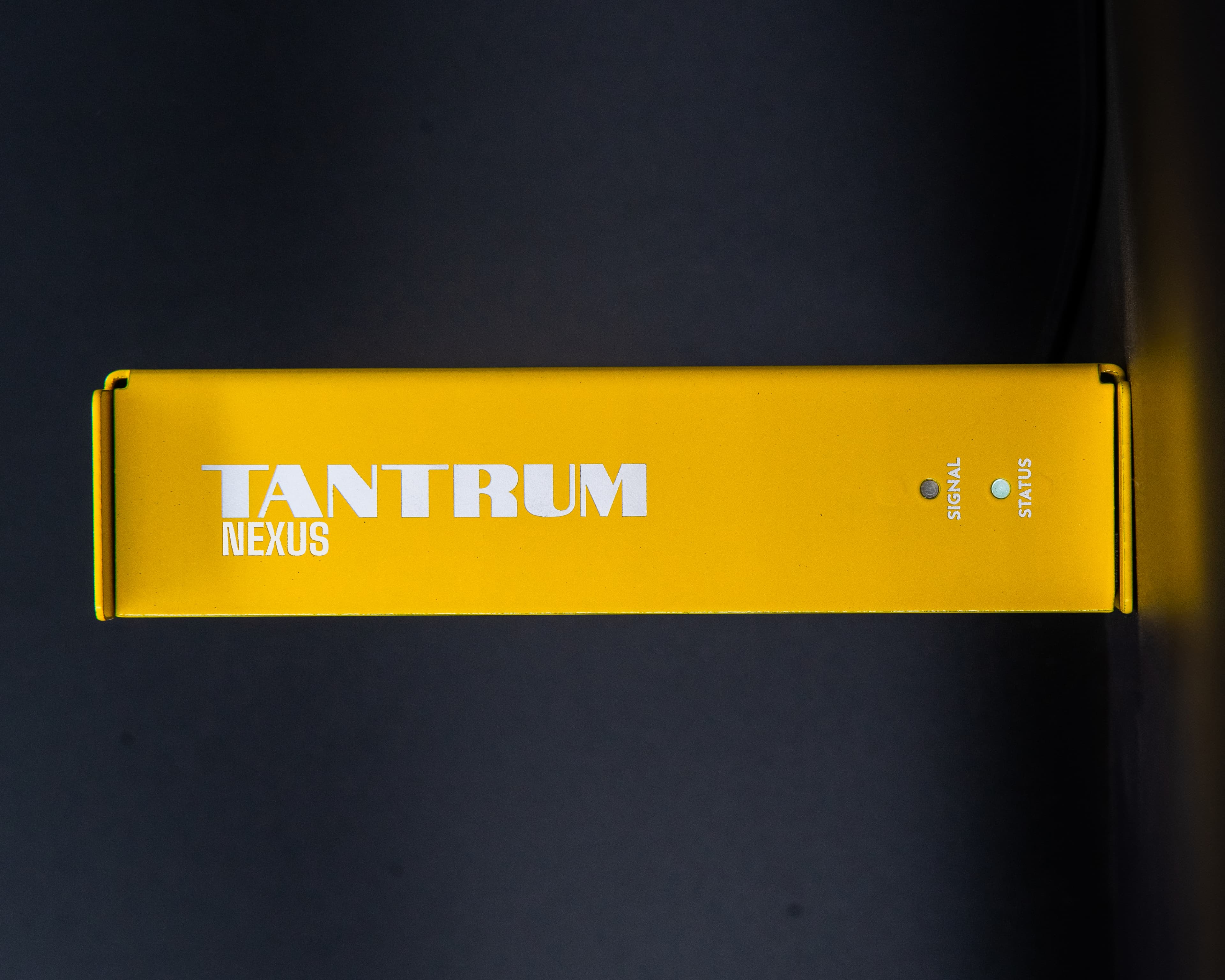
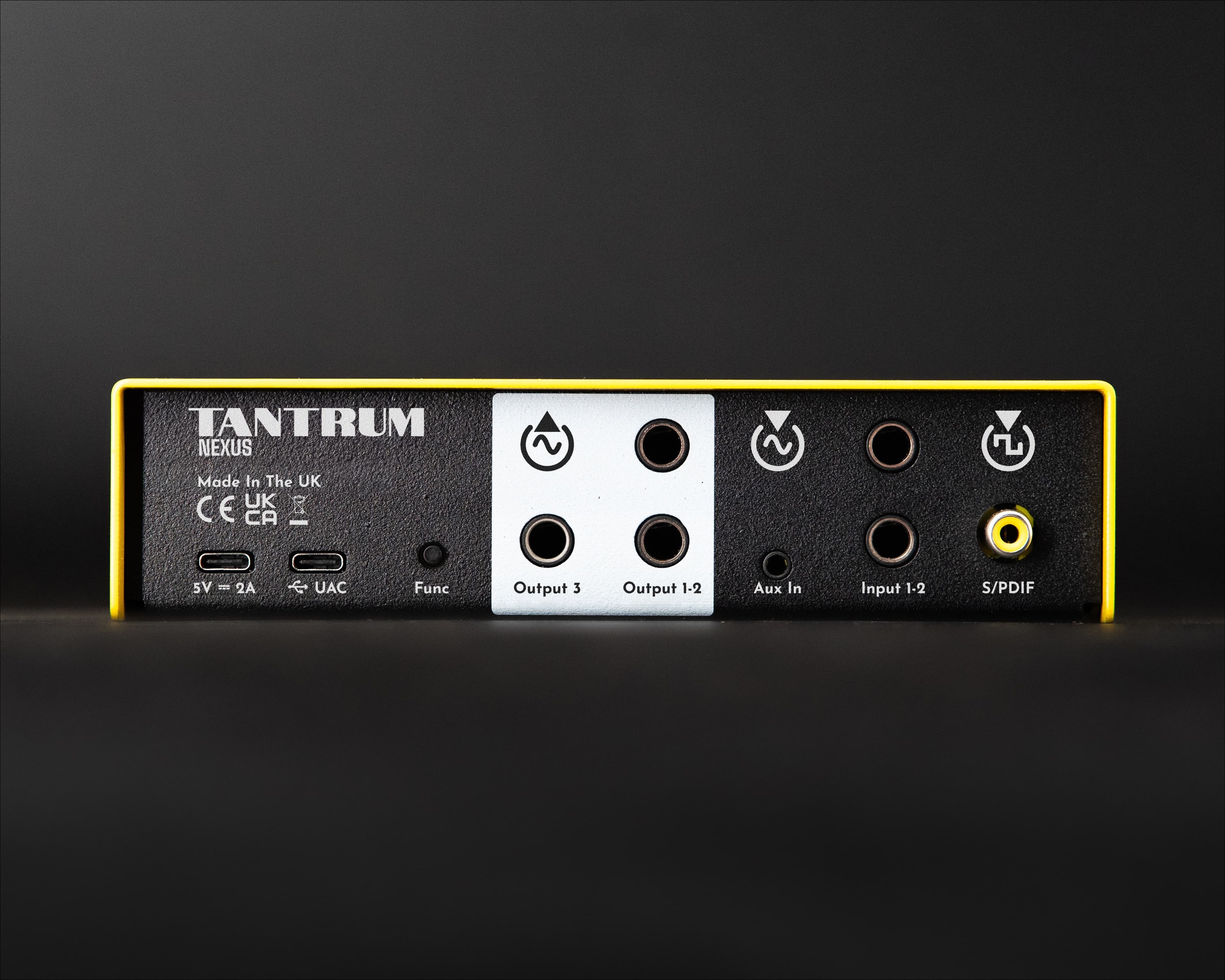
Correction in hardware travels as a box, is in the path for everything, and holds its settings without a computer. On the road that means a rig you can plug into anything and still hear something you trust. Our own NEXUS is 1U tall and 140 by 100 mm, configured by Omnissiah beforehand and then run standalone, which is the shape this use case asks for.
The On-Site Procedure
Write it down once and follow it, because a strange room at the end of a travel day is the worst place to improvise.
- 1Choose the listening end of the room. Short wall if the room is rectangular, away from the corners, and with something soft behind you if possible.
- 2Set the monitors symmetrically, tweeters at seated ear height, in a rough equilateral triangle with your head, at least 30 cm off the wall behind them.
- 3Power up, check both channels, and confirm polarity with a mono reference.
- 4Measure. A sweep at the listening position and two more 30 cm either side.
- 5Apply boundary compensation or correction as the measurement suggests, and remeasure.
- 6Play three reference tracks you know intimately at moderate level, and note where the room lies to you.
- 7Work inside what the room supports, and write down what you deferred.
Do's and Don'ts
- ✓Pack the rig as one kit, so nothing is ever left behind because it lived elsewhere.
- ✓Take a spare of every cable type and a mains block with the right plug.
- ✓Measure before you make a single decision in an unfamiliar room.
- ✓Keep three reference tracks on local storage rather than streaming.
- ✓Note what you deferred and check it at home rather than trusting memory.
- ✕Do not push the monitors into the corners because that is where the table is.
- ✕Do not carry a rig you have not lifted. Weigh it packed before the first trip.
- ✕Do not rely on correction that lives on one laptop if you might monitor from another source.
- ✕Do not make low-end decisions in a hotel room and assume they hold.
- ✕Do not skip the polarity check. A reversed cable costs a whole session of confusion.
Frequently Asked Questions
What do I need for a portable mixing setup?
Compact sealed monitors in a fitted case, something to raise them to ear height, an interface, a measurement microphone, correction in software or hardware, and spare cables. That is the whole list, and the microphone is the part people leave out and regret.
Are headphones enough for mixing while travelling?
For a lot of the work, yes, especially with a familiar pair. What they cannot give you is a room-based check on stereo width and low-end balance, so most people carry both and use each for what it is good at.
How do I set up monitors in a hotel room?
Away from corners, symmetrical, tweeters at ear height, at least 30 cm off the wall behind them, and something soft behind your head if you can manage it. Then measure, because the room will not behave like your own.
Should correction run on the laptop or in hardware for travel?
Hardware if you might monitor anything that does not pass through the laptop, or if you want the correction to be in place regardless of which machine comes. Software if the laptop is always the only source and weight is the binding constraint.
How much should a travel monitoring rig weigh?
As much as you will carry twice, which for most people lands between 8 and 15 kg packed. Weigh the assembled kit before the first trip rather than adding the items up on paper.
Conclusion
Build the rig around a pair you already trust, add height and a measurement microphone before you add anything else, and decide deliberately whether the correction travels in the laptop or in a box. Then write the on-site procedure down and follow it. The limit worth naming: a travel rig makes an unfamiliar room usable for midrange and balance work, and no rig makes a hotel room a place to finish a low end.
Sign up to hear more when we release something new


