




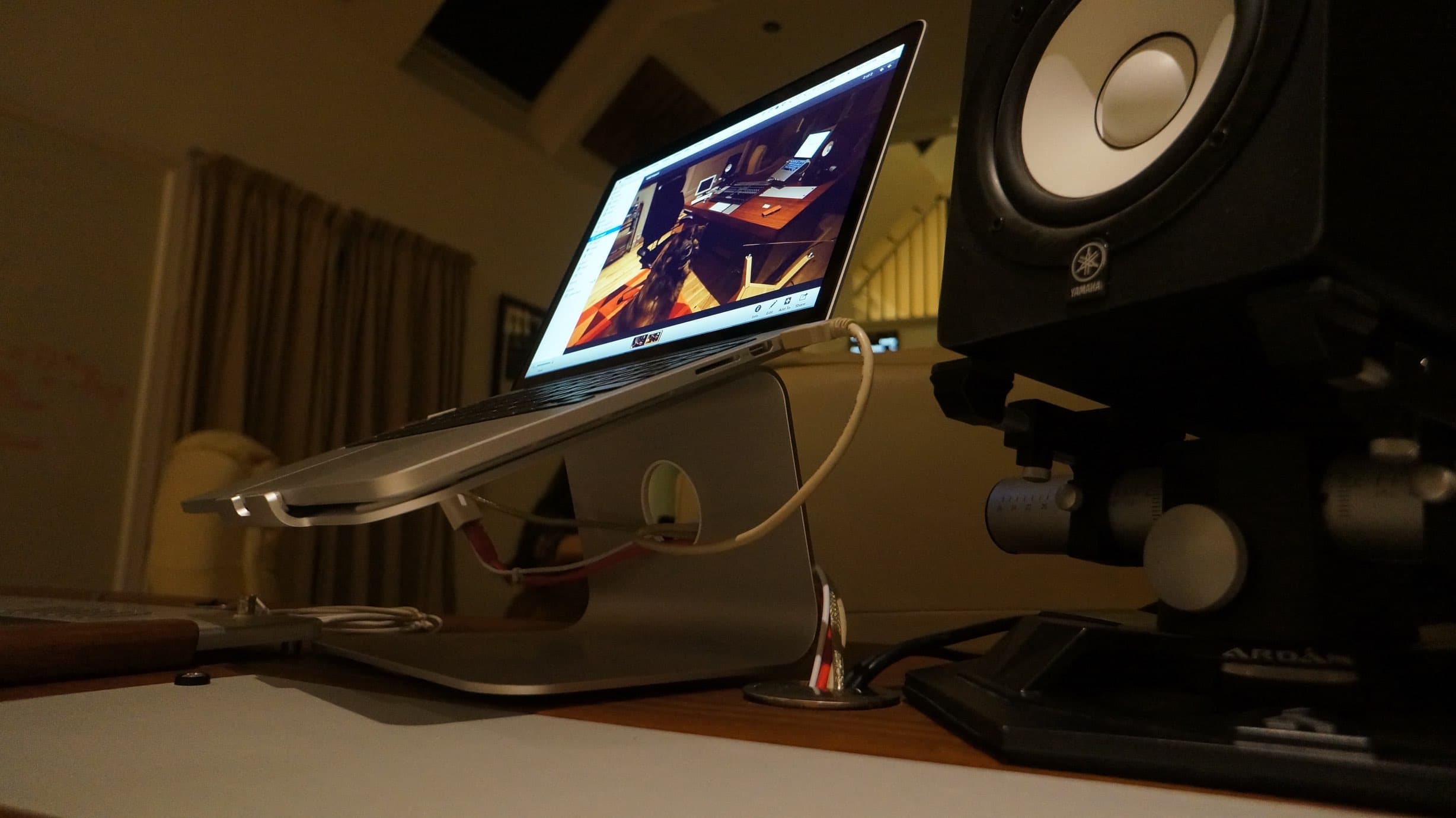
Isolation pads and monitor stands are sold as alternatives to each other and solve overlapping but different problems. A pad decouples the monitor from the surface below it, which stops structural energy reaching the desk and returning late. A stand does that and also sets the height and angle, which is the larger error in most setups. Neither addresses the desk reflection, which is a separate problem with a separate fix. This guide separates the three and says which order to attack them in.
What Each One Fixes
Three separate problems get bundled together in this comparison, and separating them makes the decision obvious.
Structural transmission. The driver pushes against the cabinet, the cabinet pushes against the desk, and the desk radiates that energy a few milliseconds later. A compliant pad interrupts the path. This is what an isolation pad is for and it does it well.
Height and angle. A tweeter below ear level puts you off axis, losing top end and changing the apparent balance. A pad raises the monitor by a few centimetres, which is rarely the amount needed. A stand is designed to close the gap.
The desk reflection. Sound leaving the monitor bounces off the desk surface and arrives at your ears shortly after the direct sound, combining with it to produce a comb filter in the low mids. Neither a pad nor a stand removes this, because it is about the path between the speaker and your ears rather than the path into the furniture.

Which One to Buy
| Symptom | Most likely fix |
|---|---|
| Desk buzzes or the whole surface hums on bass notes | Isolation pad or a decoupled stand |
| Tweeters sit below ear height | Stand, or anything that raises the monitor properly |
| Low mids sound thick and cluttered | Check the desk reflection first, then decoupling |
| Mix sounds dull in the room and bright elsewhere | Height. You are listening off axis. |
| Monitors slide about or get knocked | Stand with a proper top plate |
| Everything changes when you lean forward | Room and reflections, not the mounting |
The honest summary is that a stand does a pad's job and more, so if you are buying once, buy the stand. Pads earn their place when the height is already correct, when the monitor must sit on a shelf or a meter bridge, or when a stand simply will not fit.
The Problem Neither Solves
The desk reflection deserves separating out because it is often what people are trying to fix when they buy a pad.
The reflected path is longer than the direct one, so the reflection arrives late and the two sum with a frequency-dependent phase relationship. The result is a series of cancellations and reinforcements through the low mids, which reads as a boxy or hollow quality that follows you around regardless of what the monitors are standing on.
The fixes are geometric. Tilt the monitor so its direct output crosses above the desk surface, move it forward or back so the reflection point moves off the desk edge, or put something absorbent on the reflection point. A pad changes none of this, because the sound never enters the desk on its way to your ears.
Common Misconceptions
Isolation pads improve the sound by isolating the speaker from vibration.
They interrupt structural transmission into the desk, which is real and worth doing. They do not change the reflection off the desk, and they do not raise the tweeter, which are usually the bigger errors.
A stand and a pad do the same thing, so buy whichever is cheaper.
A stand sets height and angle as well as decoupling. The height is generally the larger of the two errors, so the cheaper product leaves most of the problem in place.
Foam under the monitors will tighten the bass.
It reduces what the desk re-radiates, which can tidy the low mids. The bass at your chair is dominated by room modes, and foam under a speaker does nothing about those.
Frequently Asked Questions
Do isolation pads actually work?
For what they do, yes. They interrupt the mechanical path into the desk, so the desk stops radiating a delayed copy of the low end. What they do not do is raise the monitor to ear height or change the reflection off the desk surface.
Are monitor stands better than isolation pads?
For most setups yes, because a stand includes the decoupling and also fixes height and angle. Pads are the right choice where the height is already correct or a stand will not physically fit.
Can I use both a stand and pads?
Yes, and many stands already include a compliant layer on the top plate. Adding a pad on top of that is harmless and rarely changes much.
Will pads fix my boomy bass?
Only the part caused by the desk resonating. If the bass changes when you move your head, you are hearing room modes and no mounting product will help. Bass trapping is the fix for that.
What about putting monitors on foam blocks from a hardware shop?
It works for decoupling. High-density foam under a speaker does what a purpose-made pad does. The compromise is stability, since a soft block lets the monitor rock, which is the opposite of what you want.
Conclusion
Buy a stand if you are buying one thing, because it fixes height and decoupling together and height is usually the bigger error. Add pads where a stand cannot go or where the height is already right. Treat the desk reflection as a third, separate problem with a geometric fix. The limit to be clear about: all three of these improve what reaches your ears from the speaker, and none of them touch what the room does afterwards.
Sign up to hear more when we release something new


